Rede Energia Participações is a company that controlled nine energy distributors located in various regions of Brazil.
The company had BNDESpar as one of its main shareholders. The company operated in the areas of generation, distribution, and commercialization of electric energy.
These activities were carried out through the subsidiaries:
Centrais Elétricas do Pará (Celpa): It is the former energy distributor of the state of Pará.
Centrais Elétricas Matogrossenses (Cemat): It is the former energy distributor of the state of Mato Grosso.
Caiuá Distribuidora de Energia: Distributed energy in the state of São Paulo.
Empresa de Distribuição de Energia Vale Paranapanema (EEVP): Former energy distributor of the state of São Paulo.
Companhia Força e Luz do Oeste: Distributed energy in the state of São Paulo.
Companhia Nacional de Energia Elétrica: Distributed energy in the state of São Paulo.
Empresa Elétrica Bragantina: Former energy distributor of the state of São Paulo.
Companhia de Energia Elétrica do Estado do Tocantins (Celtins): It is the former energy distributor of the state of Tocantins.
Empresa Energética de Mato Grosso do Sul (Enersul): It was the energy distributor of Mato Grosso do Sul.
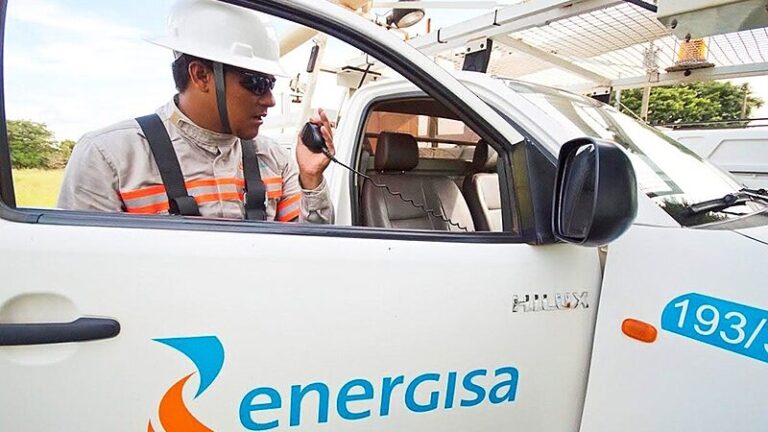
In 2014, the Energisa Group took control of 8 of the 9 distribution companies of the Rede Group that were under intervention by Aneel. Essentially, Rede Energia had been in judicial recovery since 2012 and currently belongs to Energisa.
Rede Energia has a concession area of 2,034 thousand km², the number of consumers is 7.9 million, and it serves about 20 million people.
Rede Energia was founded in 1903 and in the 1990s it focused on expanding its business. At that time, the company was under the control of Jorge Queiroz and purchased three energy distribution companies in privatization auctions.
The funds for these purchases came from loans with BNDES. The company took several loans to invest in its growth, with the intention that by generating profits, it could pay them back.
The problem is that the company's revenue did not grow at the same pace as the debt. To give you an idea, the company's debts were at 6 billion reais, while its revenue barely reached 1 billion.
Upon realizing the company's difficult situation, Jorge fled to Europe and left behind the billion-dollar debt. Of course, this generated a great controversy at the time. After all, his whereabouts were unknown and the company's future was uncertain.
In this scenario, Aneel stepped in, intervened in the group, and placed it in judicial recovery, when the purchase proposals by companies began.
There were two proposals, the first was from the Equatorial Group plus CPFL, which would assume only 15% of the billion-dollar debt. The other proposal was from the Energisa group, which was willing to take on up to 40% of the debt.
The result was that in 2014 the Energisa group bought 8 of the 9 companies of Rede Energia and promised to invest more than 3.2 billion. The Equatorial group took the other company.