At first glance, Magazine Luiza is a Brazilian retail chain. In this sense, its main activity is the sale of electronics and appliances. However, many people claim that the Company is actually a technology and innovation company. According to the owners themselves, Magazine Luiza is:
A digital platform, with physical points and human warmth.
Its main characteristics and competitive advantages that make it stand out in this market are:
Varied sales platform: physical stores, virtual stores, tele-sales, e-commerce platform, Magazinevocê, and corporate sales;
National reach, even where there is no physical presence;
Intense marketing, especially on digital media
Business Model
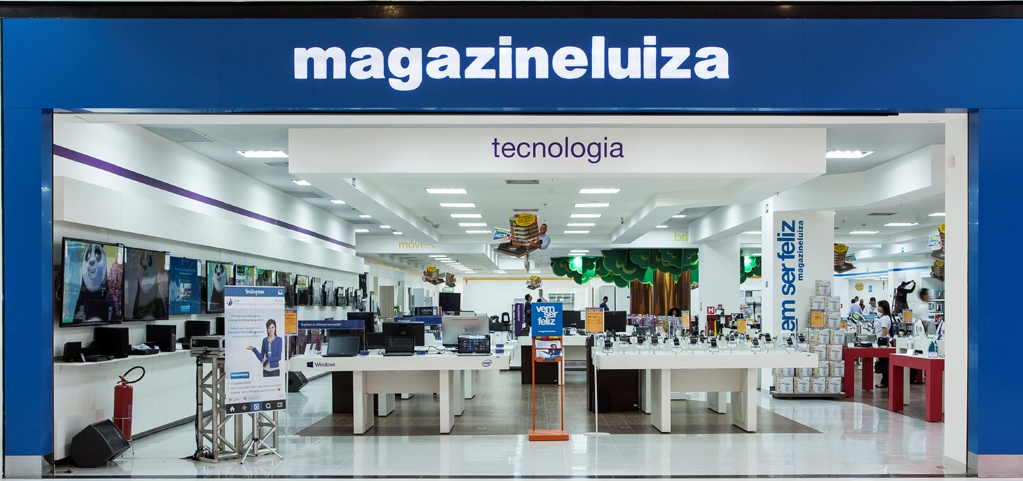
First, we can divide Magazine Luiza's business model into three segments:
Physical stores
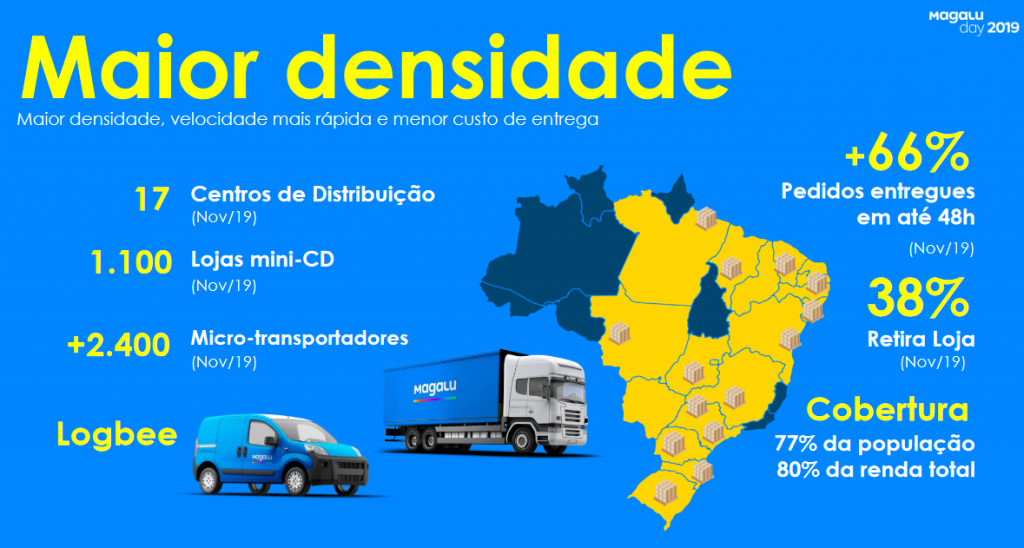
In this segment, the Company operates with stores both on strategically located streets and commercial points as well as in shopping centers. Conventional stores are generally built with an area of 700 square meters and all have their own display and stock. The Company has more than 1,000 physical stores spread across more than 700 cities around Brazil. Moreover, many units not only sell the company's own products but also items from about 8,000 sellers that are part of the Company's marketplace (digital sales platform).
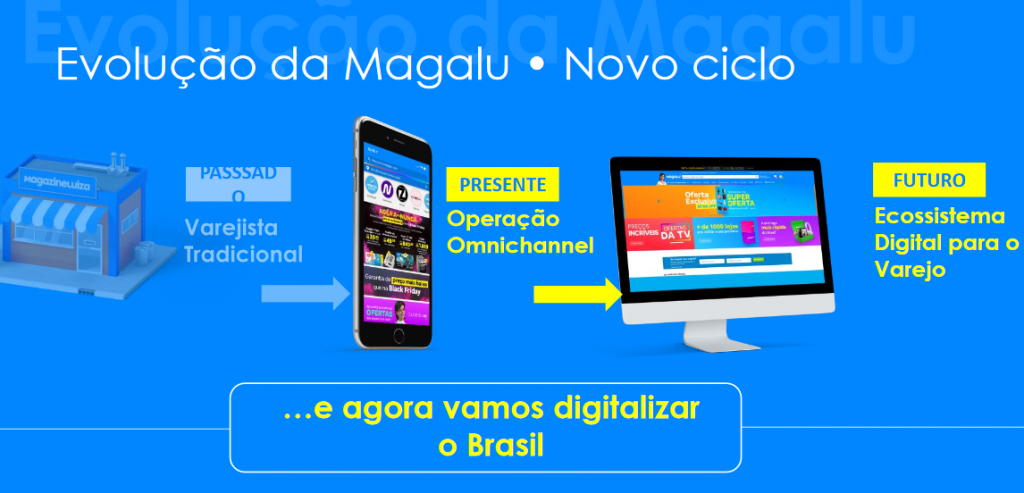
More than that, conventional stores have developed towards integration with the online store, the so-called omnichannel. Thus, the Store Pickup service, which allows purchases made through the App or website to be picked up at physical points within two days, has been increasingly significant in the company's revenue. The Company also partners with Itaú Unibanco, through Luizacred. This personal credit card network not only helps customers with purchases but also allows the company to earn part of the profit from the loans made.
Virtual stores
Pioneeringly, Magazine Luiza started operations with virtual stores in 1992, with the entry of Luiza Helena Trajano Inácio Rodrigues, the founder's niece. In this model, the company operates with smaller stores and no display. However, the product portfolio is similar to that of the conventional store, and all product demonstrations are made through digital resources used by the sellers. In contrast, virtual stores require lower operating costs and, as a result, can reach smaller cities.
E-commerce and Market-Place
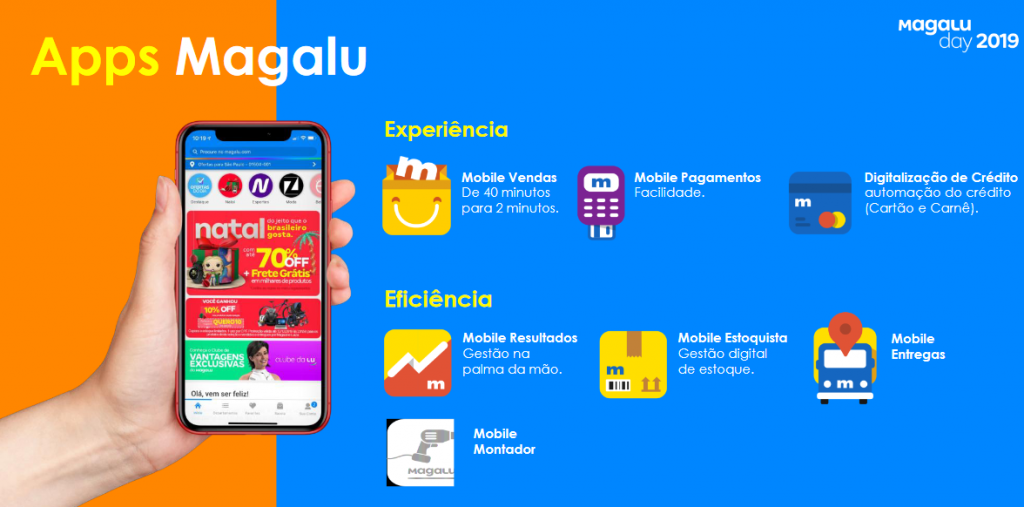
Through exclusive offers, differentiated services, and complete integration with sales channels, the Company's E-commerce provides a unique experience for the customer. Thus, it offers a complete mix of products through the Magalu App and its own website. Additionally, the company sells third-party products on these platforms, such as travel, books, dietary supplements, sports articles, among others. Another interesting strategy is magazinevocê, in which the Company offers individuals the opportunity to become partners of the company and thus earn commissions from their sales. Clearly, this boosts sales and expands the digital channel, engaging the community.
Incredibly, after acquiring Netshoes in 2019, Magazine Luiza became a leader in online retail of clothing, footwear, and sports articles, adding more than 250,000 items to its portfolio, greatly enhancing its digital strategy.
Moreover, the nicknamed Magalu also has LuizaLabs, a development and innovation laboratory where more than 400 developers work, putting technology at the service of the shopping experience. LuizaLabs is an example of the Company's digital culture, which has already given rise to Mobile Sales, Mobile Assembler, Mobile Stockist, and the adoption of Big Data (customized product recommendation system).
Logistics and Marketing

This large retailer has more than 15 distribution centers strategically located in Brazil and employs about 22,000 people. The company's integrated multichannel strategy, which has been strengthened since 2015, also benefits its logistics, as the delivery points in physical stores are closer to customers.
Like any other large company, advertising is essential to consolidate and promote its brand in the country. In this sense, Magazine Luiza has been heavily investing for years in marketing across various media platforms, always featuring recognized personalities in the Brazilian scene. Definitely, the company's focus is to lead the digital transformations that are occurring, in addition to gaining market share and operational efficiency, with great visibility.
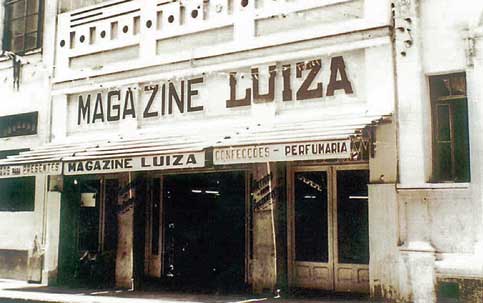
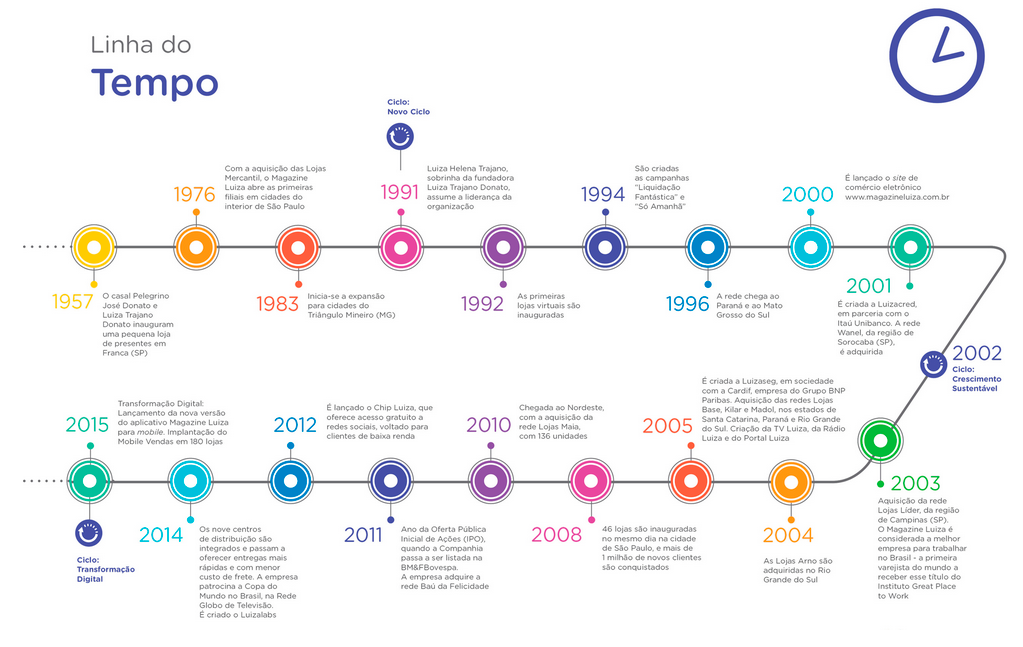
The entire history of Magazine Luiza begins in 1957, when founders Luiza Trajano Donato and Pelegrino José Donato opened a small gift shop in Franca-SP. In 1976, after acquiring Lojas Mercantil, the Company began opening branches in other cities in the state of São Paulo. Growth became more evident in 1983, when its stores reached the Triângulo Mineiro region.
A new cycle in the company began in 1992, when the founder's niece took over the Company's management. The following year, under Luiza Helena Trajano's direction, the first virtual stores were inaugurated, and in 1996, physical stores arrived in the states of Paraná and Mato Grosso do Sul. The modernization process was realized a few years later, revealing the company's capacity to become a reference.
With the turn of the century, a significant step was taken in the company's evolution, with the creation of the e-commerce website. In 2001, Magalu created Luizacred in partnership with Itaú bank to assist retail businesses, a trend adopted by other companies facilitating credit-related operations in the company's business.
In 2003, Lojas Líder was acquired by the company, and the following year, they also gained control of Lojas Arno in Rio Grande do Sul. In 2010, Magazine Luiza reached the Brazilian Northeast through the acquisition of Lojas Maia, which at the time already had 136 units.
Magazine Luiza's IPO

The company's IPO was in 2011, and after the initial public offering of its shares in the market, Magazine Luiza became listed in the Novo Mercado segment of Bovespa. The pricing was R$ 16, at the lower end of the range of R$ 16 to R$ 21. The total turnover of the operation between primary and secondary offerings amounted to R$ 925.8 million.
After the capital opening, three years later in 2014, nine distribution centers were integrated and began to operate cooperatively to reduce product delivery times and thus improve the shopping experience.
In the same year, LuizLabs was created to establish a base of digital innovation within the Company. By the end of 2015, 75 software engineers were already working in this development laboratory in the cities of São Paulo and Franca. Still in 2015, Magazine Luiza launched the new version of the sales App, as well as integrated the Mobile Sales service in more than 180 stores, in a process of digitizing physical stores.
Recently, in 2019, Magazine Luiza finally managed to acquire Netshoes for approximately US$ 115 million. As a result, it was able to add several brands from the sports retail segment to its portfolio and expand its customer base.