Whirlpool is a leader in kitchen and laundry appliances. Therefore, the company's products are: appliances, consumer electronics, household utilities, and domestic equipment.
The company is present throughout Brazil through the brands Brastemp, Consul, KitchenAid, Compra Certa, and B.blend. In other markets in Latin America, it is represented by the brands Consul, Jenn-Air, KitchenAid, Eslabón de Lujo, Whirlpool, and Maytag.
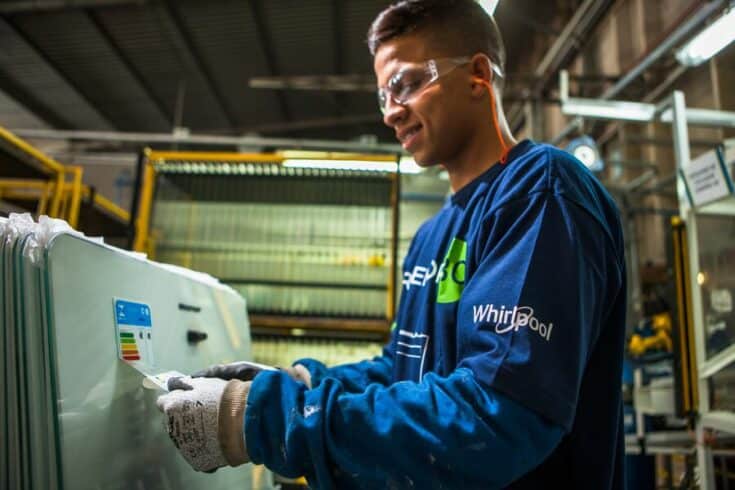
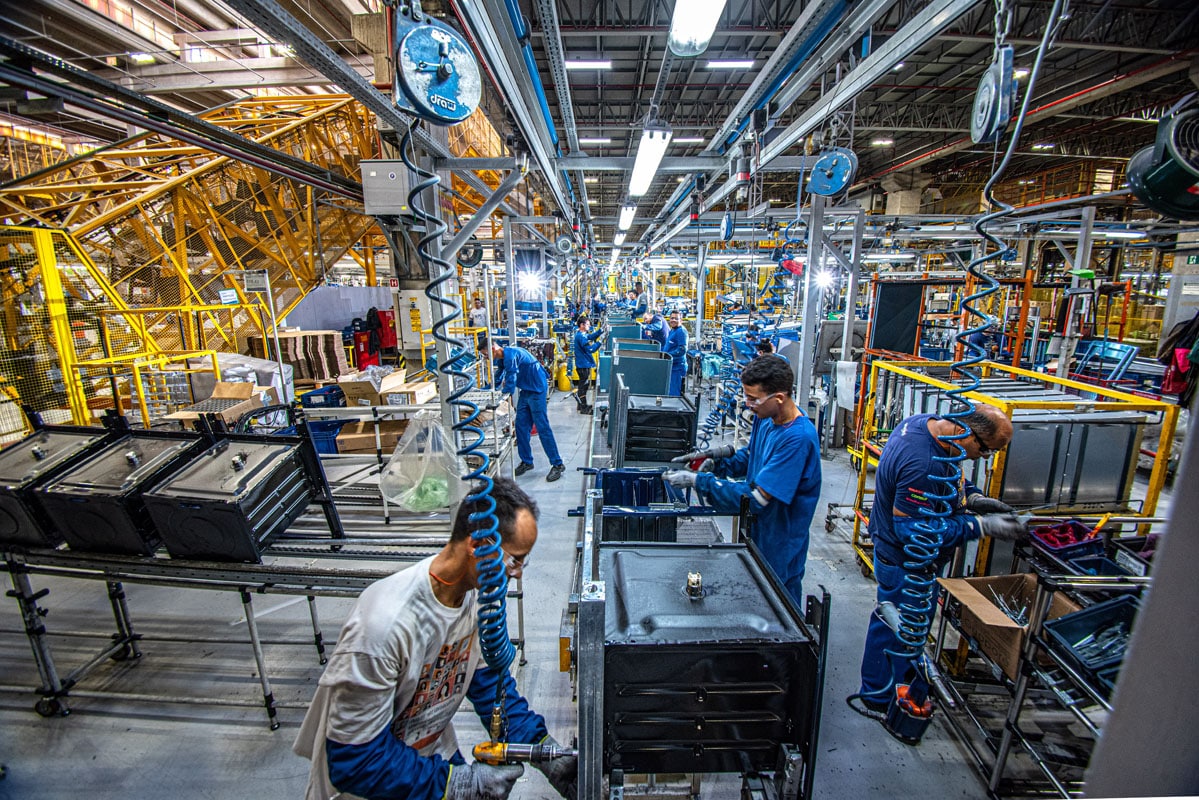
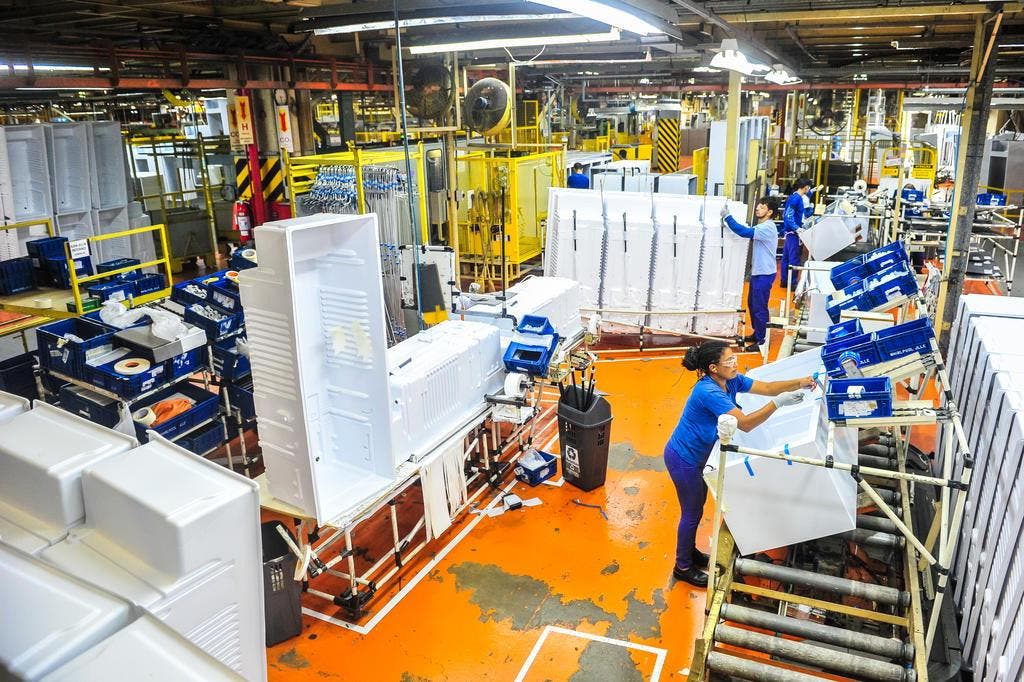
In Brazil, Whirlpool has an administrative center in São Paulo and three factories located in Joinville (Santa Catarina), Manaus (Amazonas), and Rio Claro (São Paulo). In addition, the company has four Technology Centers, three Distribution Centers, 23 Laboratories, and about 11,000 employees.
It is worth noting that Latin America is one of Whirlpool's main consumer markets in the world. In Brazil, the brands Brastemp and Consul are the leaders in preference in the country and together hold almost half of the market.
Whirlpool's history began in November 1911, when brothers Louis and Frederick Upton joined their cousin Emory to found the Upton Machine Company.
The company was responsible for manufacturing the first washing machines with electric motors. These machines were made of wood and had the function of washing and wringing clothes.
The company's first order was placed by Federal Electric, which ordered 100 washing machines. However, all the machines had operational defects.
Soon, to prevent the company's reputation from being tarnished, the founders repaired all the machines at no charge. Impressed with the company's ethics, Federal Electric doubled the order.
Five years later, Upton Machine Company received another important order: 100 washing machines for Sears Roebuck & CO, a famous department store. The intention was for the machines to be sold by the store under the Kennmore brand.
The result of the partnership was very positive, and after a few months, demand exceeded production. Subsequently, in 1929, the company merged with Nineteen Hundred Washer Company (a washing machine manufacturer) and formed Nineteen Hundred Corporation.
By 1938, the company launched the first washing machine with motorized agitation, and in 1948, the first automatic washing machines under the Whirlpool brand were introduced to the market.
The name Whirlpool was first used by Horton Manufacturing Company in 1906 as a brand for its washing machines, which was acquired by Nineteen Hundred Washer Co in 1922.
Over the years, Nineteen Hundred Corporation incorporated new products into its portfolio, such as irons. In 1950, the company officially changed its name to Whirlpool Corporation.
In the same year, it launched the first automatic dryers, and starting in 1955, several new products were added to the company's line, such as refrigerators and stoves.
In 1958, Whirlpool made its first investments in Brasmotor and entered the Brazilian appliance market. This was its first attempt to operate in a foreign market. In 1960, Whirlpool secured a contract with NASA to develop and build the first experimental space kitchen.
This project was very important for the company, as it marked Whirlpool's first attempt to work with the problem of zero gravity, and many of the solutions created were used in future products.
In 1967, Whirlpool was a pioneer in introducing a 24-hour consumer service line. By 1969, the company launched another new product: the household garbage compactor, and in 1977, the company relaunched the microwave oven.
In the 1980s, Whirlpool expanded to several countries, including Argentina, Mexico, China, and Canada. In 1986, Whirlpool acquired the famous KitchenAid brand, which has been manufacturing premium appliances since 1919.
In 1998, Whirlpool launched a washing machine that saves water and energy, and in 2001, it introduced the first complete line of appliances with the Energy Star label, indicating that the products consume less energy than others in the same category.
In 2006, Whirlpool acquired Maytag and became the largest appliance manufacturer in the world.
Whirlpool in Brazil
Whirlpool took part of the controlling interest in Multibrás S/A Eletrodomésticos in 1997. Multibrás was responsible for manufacturing appliances for the brands Consul, Semer, and Brastemp.
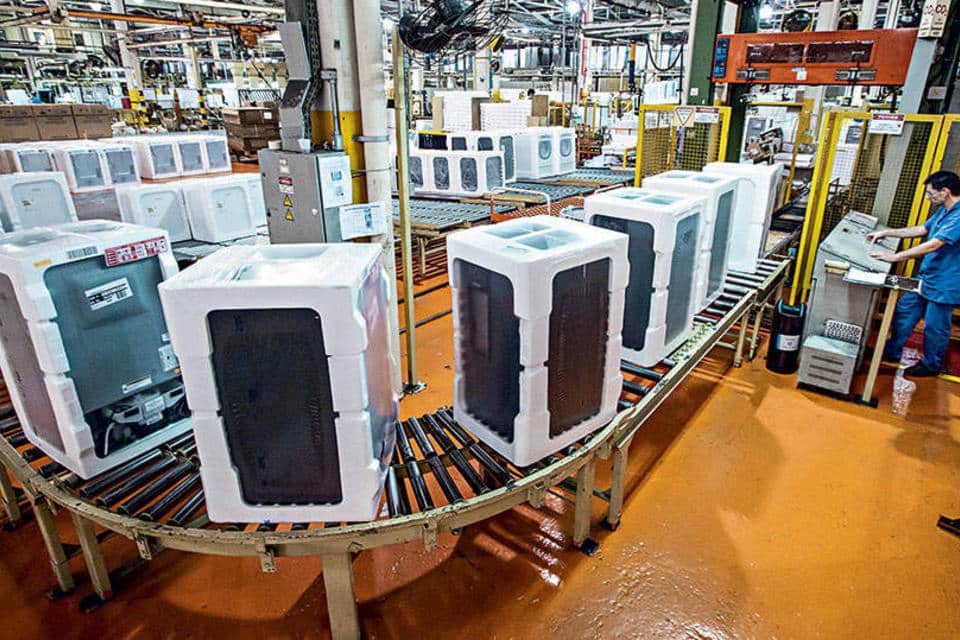
In the following years, Whirlpool purchased approximately 98% of Multibrás's shares and became the majority shareholder. In 2006, Whirlpool decided to reorganize its shareholding structure and, through the merger of Multibrás and Embraco, founded Whirlpool S.A.
Over the years, Whirlpool has made several innovations in Brazil. For example, it launched the world's first one-door frost-free refrigerator and the first gas stove with a steam oven option.