Company Data
CNPJ
Market Cap
Number of Shares
Listing Segment
IPO Date
Key Indicators
P/E
P/VP
DY
Tag Along
Free float
Viability Seal
We use cookies that are necessary for the site to work and, with your permission, analytics and marketing cookies to improve your experience. You can accept all of them or choose what to allow.
Company Data
CNPJ
Market Cap
Number of Shares
Listing Segment
IPO Date
Key Indicators
P/E
P/VP
DY
Tag Along
Free float
Viability Seal
See what thousands of investors think and vote on the assets you consider viable
Company Data
CNPJ
83.878.892/0001-55
Market Cap
R$7B
Number of Shares
38.57M
Listing Segment
BOVESPA NÍVEL 2
IPO Date
12/12/1988
Key Indicators
P/E
8.35
P/VP
1.73
DY
7.66%
Tag Along
100.00%
Free float
75.73%
Viability Seal
Find out whether the asset is viable or a dud
Loading data
Loading...
Discover whether an asset is an opportunity or a risk through our seal.


CASH3
Méliuz S.A

PETR4
Petróleo Brasileiro S.A Petrobras

ABEV3
Ambev S.A

ITUB3
Itaú Unibanco Holding S.A
The stock is undefined relative to the fair price by the Graham formula.
R$173.51
The stock is undefined relative to the fair price by the Bazin formula.
R$173.51

No index
Celesc – Centrais Elétricas de Santa Catarina S.A. is a company in the Brazilian electric sector, controlled by the State of Santa Catarina, which holds 50.2% of the company's common shares, corresponding to 20.2% of the total shares of the company.
Considered one of the largest companies in the Brazilian electric sector, Celesc stands out in the areas of energy generation and distribution. In 2006, the company was structured as a holding and began managing two wholly-owned subsidiaries: Celesc Geração S.A and Celesc Distribuição S.A.
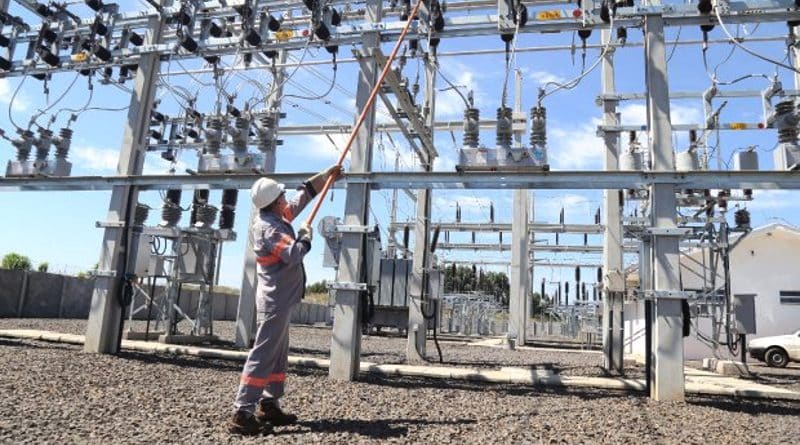
In addition to the subsidiaries, Celesc also holds the controlling interest in the Companhia de Gás de Santa Catarina (SCGÁS), as well as being a partner in the companies: Companhia Catarinense de Água e Saneamento (CASAN), Dona Francisca Energética S.A. (DEFESA), Empresa Catarinense de Transmissão de Energia S.A. (ECTE), as well as the Cubatão Hydroelectric Plant project.
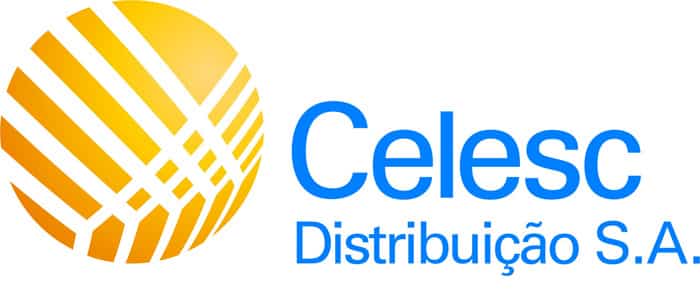
Celesc Distribuição S.A is the subsidiary of Centrais Elétricas de Santa Catarina that focuses on the distribution of electric energy. Its headquarters is located in the municipality of Florianópolis, where the company provides services to more than 286 municipalities in Santa Catarina, corresponding to 92% of the territory of Santa Catarina.
In terms of supply revenue, Celesc Distribuição ranks as the 6th largest electric energy distributor in Brazil. Additionally, the company is the 7th largest in terms of energy volume distributed and the 10th in the number of consumer units.
Every month, the company distributes about 2.1 million GWh and, in 2019 alone, achieved an annual gross revenue of R$ 12.7 billion.
Celesc Geração is the subsidiary of Celesc that operates in electricity generation. The actions developed by the company are carried out through the operation, maintenance, marketing, and expansion of the generation parks it owns, as well as participation in energy projects with partner private investors.
The company has its own generating park formed by 12 plants, namely:
1 Small Hydroelectric Plant – PCH;
5 Hydroelectric Generating Plants – CGHs;
6 Hydroelectric Plants – UHEs.
Additionally, in terms of energy generation, Celesc Geração has a minority stake in 6 more generation ventures, all developed in partnership with private investors, using the Specific Purpose Company – SPE format.
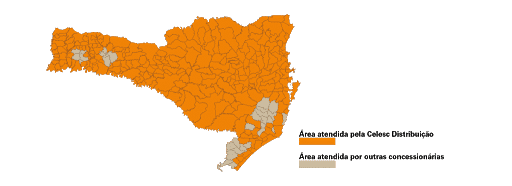
At the end of 2020, the company registered a total generation capacity equivalent to 118.21 MW, with this total divided between its own park (106.97 MW) and the generated park established with partners (11.24 MW).
In general, all the plants in the own generating park and in partnership are part of the Energy Reallocation Mechanism – MRE. Basically, the MRE consists of a system for sharing hydrological risks, in which the excess generated energy is transferred to the plants that generate energy below the stipulated value.
Celesc also holds the controlling interest in the Companhia de Gás de Santa Catarina (SCGÁS), considered the 2nd largest distributor of piped gas in terms of municipalities served in Brazil.
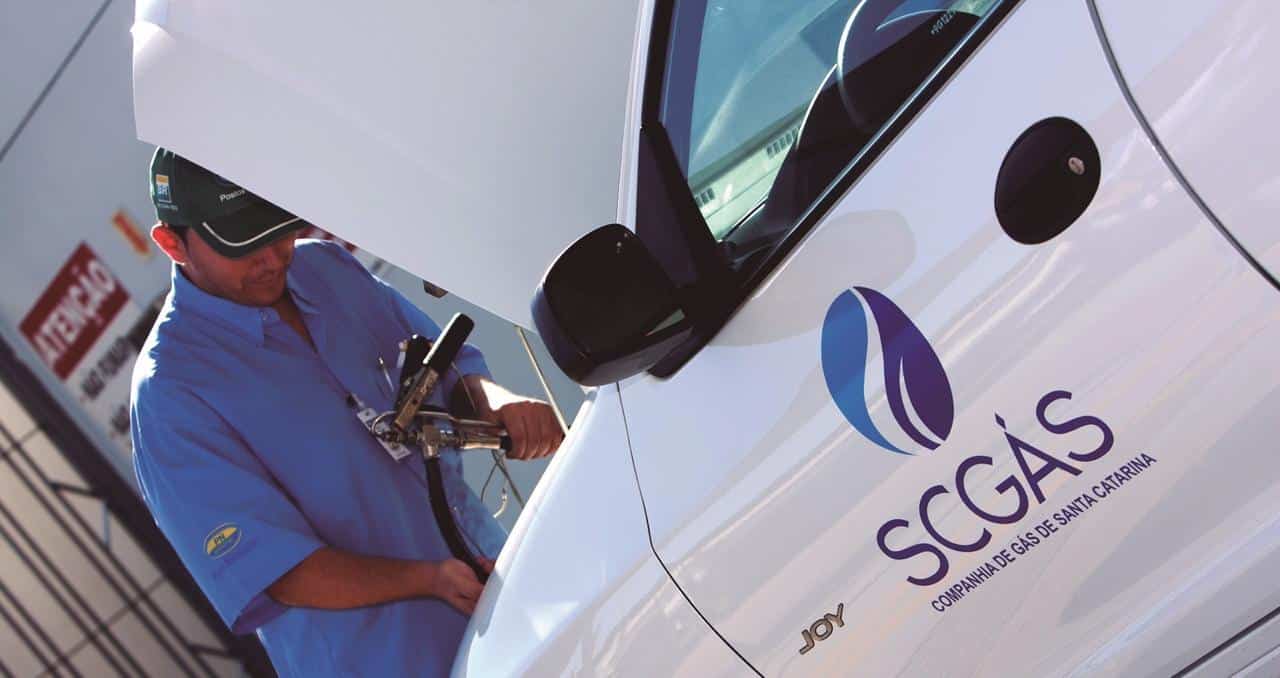
Santa Catarina, in turn, is the 4th State with the largest natural gas distribution network, with a total of 1,157 kilometers, and is also the 3rd largest in the number of industries served with natural gas, totaling 279. Additionally, SC has the 3rd largest network of vehicle gas stations in the country, with a total of 135 stations.
In addition to SCGÁS, Celesc has stakes in:
Empresa Catarinense de Transmissão de Energia – ECTE;
Dona Francisca Energética S.A – DFESA;
Companhia Catarinense de Água e Saneamento – CASAN;
Cubatão Hydroelectric Plant S.A.
At the time Celesc was founded, the electric power system in Santa Catarina was still suffering from constant rationing. Darkness was frequent, and the few places that had electricity were supplied by small and medium electric systems, mostly private.
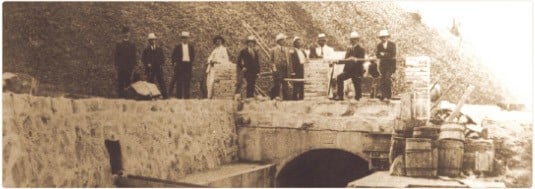
In the 1960s, the company operated as a planning body for the state electric system and only later took on the role of holding. From then on, the company gradually began to incorporate the assets of former regional companies. This is how the expansion process of Celesc began.
It was also in the 1960s that the first hydroelectric plants of the company began to be built, and today they are part of its own generation park. From 1965, Celesc consolidated itself in the market and in the state electric segment, where it began to integrate the regions of the state of Santa Catarina and nearby regions.
As part of the company's expansion processes, Celesc began the construction of the Tubarão Transmission Line, considered the backbone of the electric system of Santa Catarina, in addition to having built the North Trunk line, located between the substations Santo Bento, Joinville, Rio Negrinho, Canoinhas, and Mafra.
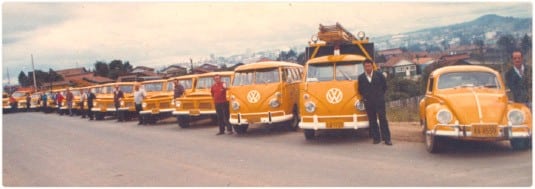
Due to Celesc's expansion, by 1980 the company had already reached half a million customers, marking a historic milestone for the time. By 1989, the company was already serving one million customers. In the 1990s, Celesc reached the level of one of the largest and best electric energy distribution companies in the country.
At the end of the 1990s, Celesc began, as a minority shareholder, the process of participating in other infrastructure companies. At this time, it started participating in the Empresa Catarinense de Transmissão de Energia (ECTE), Dona Francisca Energética S.A. (DFESA), Companhia de Água e Saneamento (CASAN).
In 2004, the company reached the milestone of two million customers served, the same number of inhabitants that Santa Catarina had when Celesc was created. At that time, the company served fewer than 35,000 consumers in 16 municipalities.
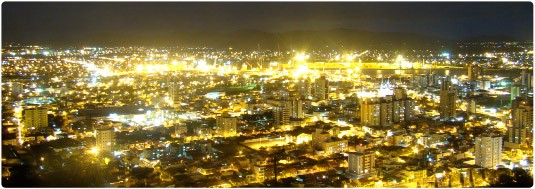
By 2006, Celesc was structured as a holding and began to have two subsidiaries: Celesc Geração S.A and Celesc Distribuição S.A. In addition, it began to have stakes in other companies, such as DEFESA, CASAN, ECTE, among others.
In the following year, the controlling interest of the Companhia de Gás de Santa Catarina – SCGÁS was assumed by Celesc, and in 2009, the company expanded its participation in the area of electric energy transmission after acquiring more shares of ECTE.
Finally, on the Stock Exchange, Celesc is listed on Level 2 of Corporate Governance, with common shares (CLSC3), preferred shares (CLSC3F), and fractional shares (CLSC4F).