
Company Data
CNPJ
Market Cap
Number of Shares
Listing Segment
IPO Date
Key Indicators
P/E
P/VP
DY
Tag Along
Free float
Viability Seal

We use cookies that are necessary for the site to work and, with your permission, analytics and marketing cookies to improve your experience. You can accept all of them or choose what to allow.
Company Data
CNPJ
Market Cap
Number of Shares
Listing Segment
IPO Date
Key Indicators
P/E
P/VP
DY
Tag Along
Free float
Viability Seal
See what thousands of investors think and vote on the assets you consider viable
Acredito que seja uma boa janela de entrada em uma empresa com números tão bons, com a alteração da diretoria e novos investimentos em áreas diferentes, logo os retornos virão. Estou aproveitando ao máximo essa "promoção".
 6
6Queria aproveitar também, mas falta verba kkkkkkk
2Seria possível inserir a data do IPO dos ativos? Só pra ter uma ideia do tempo que o ativo está na bolsa... Obrigado.
3Gostei da ideia de inserir o IPO nos dados dos ativos (ações) facilita certas análises.
Ainda vale comprar ações do BBDC4
2No Investing aparece a informação de que está queimando caixa rapidamente, alguém sabe dizer se a informação está correta?
Company Data
CNPJ
60.746.948/0001-12
Market Cap
R$213B
Number of Shares
11.19B
Listing Segment
BOVESPA NÍVEL 1
IPO Date
11/26/1946
Key Indicators
P/E
7.67
P/VP
1.03
DY
8.12%
Tag Along
100.00%
Free float
61.98%
Viability Seal
Find out whether the asset is viable or a dud
The Basel Ratio of BCO BRADESCO S.A. (BBDC3) is at 15.56%, according to data from the Central Bank of Brazil. This indicator measures the relationship between the bank's own equity and third-party funds exposed to risk through credit operations. As a reference, the minimum required by the Central Bank is 11%. In practice, this means that for every R$ 100.00 lent, BCO BRADESCO S.A. holds R$ 15.56 in own capital, demonstrating its capacity to absorb risks and maintain financial soundness.
The Fixed Assets Ratio of BCO BRADESCO S.A. (BBDC3) is at 31.61%. This indicator shows how much of the institution's net equity is invested in permanent assets, such as real estate and vehicles, which cannot be quickly converted into cash. The lower the ratio, the greater the institution's flexibility to meet obligations and invest in new operations. The maximum limit permitted by the Central Bank is 50%, and in the case of BCO BRADESCO S.A., this means that for every R$ 100.00 in equity, R$ 31.61 are allocated to low-liquidity assets.
Loading data
Loading...
Discover whether an asset is an opportunity or a risk through our seal.


CASH3
Méliuz S.A

PETR4
Petróleo Brasileiro S.A Petrobras

ABEV3
Ambev S.A

ITUB3
Itaú Unibanco Holding S.A
The stock is undefined relative to the fair price by the Graham formula.
R$18.08
The stock is undefined relative to the fair price by the Bazin formula.
R$18.08

Average
Banco Bradesco S.A. is a publicly traded private company that provides banking services.. Like other large banks, it primarily develops banking products such as: checking accounts, credit transactions, and financing. On B3, it is traded under the codes BBDC3 and BBDC4.
In general, the bank consists of a vast institutional network, bringing together branches in all states of Brazil. In total, Bradesco has approximately 4,478 branches, in addition to:
222 service points;
900 self-service terminals (Bradesco day and night);
820 self-service terminals (Banco 24horas);
14 branches and subsidiaries abroad.
Banco Bradesco's main differentiator is the offering of products in two distinct segments differentiated segments. The first consists of conventional banking services, such as credit transactions, asset management, and leasing.
The second segment is related to the provision of services in the insurance business, including pension plans. In other words, Bradesco's business model combines banking activities with insurance activities.
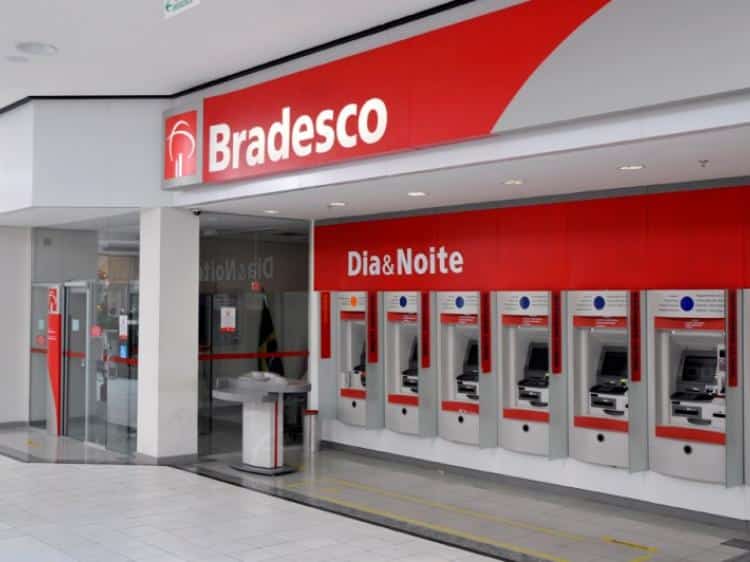
In addition to being present in all Brazilian states, the bank also offers internet banking and mobile applications. Another differentiator of Bradesco is its customer service structure, which operates on a segmented basis in order to offer customized solutions for different customer profiles.
Bradesco's history began in 1943, when Amador Aguiar founded Banco Brasileiro de Descontos in Marília – in the interior of São Paulo. At the time, the bank's initial idea was to differentiate itself from the other banks that existed. This was because the vast majority of financial centers focused on business owners.
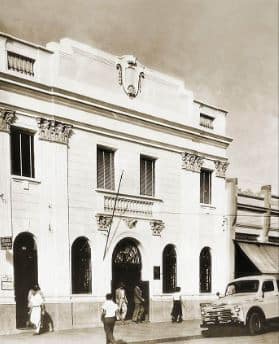
Thus, the then Banco Brasileiro de Descontos sought to attract small business owners, civil servants, and people with modest assets who wished to learn more about the world of finance. When it was founded, Banco Brasileiro de Desconto encouraged its account holders to use checks, pioneering the field.


