Company Data
CNPJ
Market Cap
Number of Shares
Listing Segment
IPO Date
Key Indicators
P/E
P/VP
DY
Tag Along
Free float
Viability Seal

We use cookies that are necessary for the site to work and, with your permission, analytics and marketing cookies to improve your experience. You can accept all of them or choose what to allow.
Company Data
CNPJ
Market Cap
Number of Shares
Listing Segment
IPO Date
Key Indicators
P/E
P/VP
DY
Tag Along
Free float
Viability Seal
See what thousands of investors think and vote on the assets you consider viable
saiu um fato relevante sobre o aumento de capital social, se isso se concretizar e aumentar a liquidez é STRONG BUY
 2
2Um banco que tem crescido bastante, apresentando bons fundamentos. A problemática ai é o free float de 2,99% - por isso a liquidez baixa. Caso o capital social realmente aumente, será um investimento muito bom!
1Company Data
CNPJ
04.902.979/0001-44
Market Cap
R$4.2B
Number of Shares
56.05M
Listing Segment
BOLSA
IPO Date
7/20/1977
Key Indicators
P/E
4.79
P/VP
0.58
DY
15.56%
Tag Along
Unknown
Free float
2.99%
Viability Seal
Find out whether the asset is viable or a dud
The Basel Ratio of BCO AMAZONIA S.A. (BAZA3) is at 13.02%, according to data from the Central Bank of Brazil. This indicator measures the relationship between the bank's own equity and third-party funds exposed to risk through credit operations. As a reference, the minimum required by the Central Bank is 11%. In practice, this means that for every R$ 100.00 lent, BCO AMAZONIA S.A. holds R$ 13.02 in own capital, demonstrating its capacity to absorb risks and maintain financial soundness.
The Fixed Assets Ratio of BCO AMAZONIA S.A. (BAZA3) is at 2.56%. This indicator shows how much of the institution's net equity is invested in permanent assets, such as real estate and vehicles, which cannot be quickly converted into cash. The lower the ratio, the greater the institution's flexibility to meet obligations and invest in new operations. The maximum limit permitted by the Central Bank is 50%, and in the case of BCO AMAZONIA S.A., this means that for every R$ 100.00 in equity, R$ 2.56 are allocated to low-liquidity assets.
Loading data
Loading...
Discover whether an asset is an opportunity or a risk through our seal.


CASH3
Méliuz S.A

PETR4
Petróleo Brasileiro S.A Petrobras

ABEV3
Ambev S.A

ITUB3
Itaú Unibanco Holding S.A
The stock is undefined relative to the fair price by the Graham formula.
R$77.03
The stock is undefined relative to the fair price by the Bazin formula.
R$77.03

Good
The Bank of the Amazon is a publicly traded financial institution and a corporation. As a way to promote sustainable development in the North region, the bank manages the FNO – Constitutional Fund for Financing the North. In addition, the bank holds a 60% share of the total credit for promoting the North region, as well as offering financial products for individuals and legal entities.
In total, the financial institution has 120 branches distributed across nine states of the Legal Amazon. Additionally, the bank has two advanced service points, as well as 3,000 employees.
Since the Federal Government holds the majority of the shares of the Bank of the Amazon, the institution is not classified as a state bank. At the time it was created, during World War II, the bank was called the Rubber Credit Bank. At that moment, the bank had the participation of the United States, as it was part of the allies' war strategy.
Thus, the bank was created so that rubber production could be reactivated in the Amazon. The Amazon, at that time, was the only area capable of producing latex in a quantity necessary to contain the Nazis. This was because the area was located in the conflict-free space.
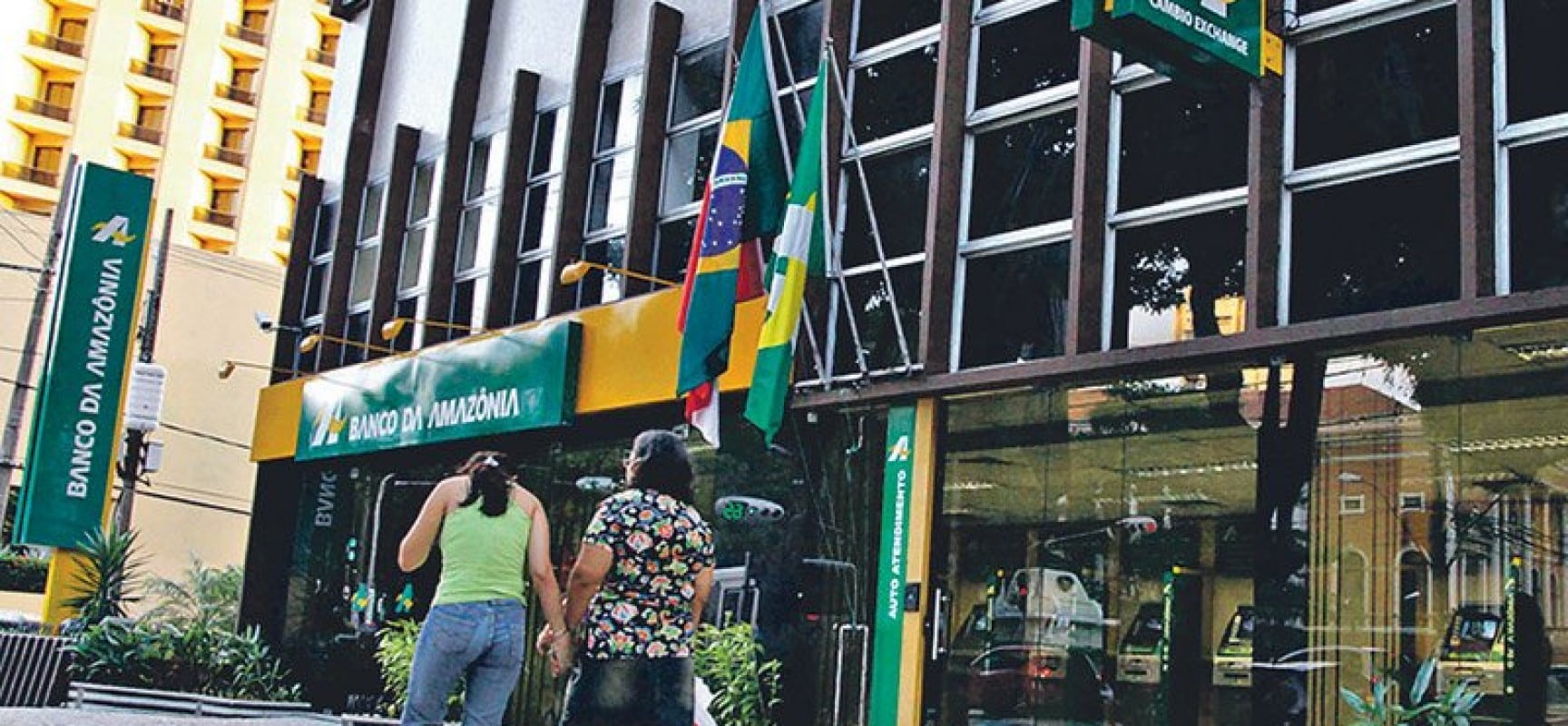
The name of the bank as we know it today was only acquired during the Military Dictatorship, when the institution began to be known as Basa. Currently, the Bank of the Amazon is the main federal development bank that acts for the development of the North region. Although the focus is on the states of the North region, the institution is also present in Brasília and São Paulo.
Like other financial institutions, the Bank of the Amazon has the following main products:
Bank Account;
Card;
Capitalization;
Loan;
Pension;
Investments;
Credit Portability;
Current Account;
Financing;
Foreign Exchange and Foreign Trade;
Insurance.
The history of the Bank of the Amazon began during World War II. Initially, the bank was created under the name Rubber Credit Bank and the main objective was to finance the rubber plantations in the North region for the allied countries that were at war.
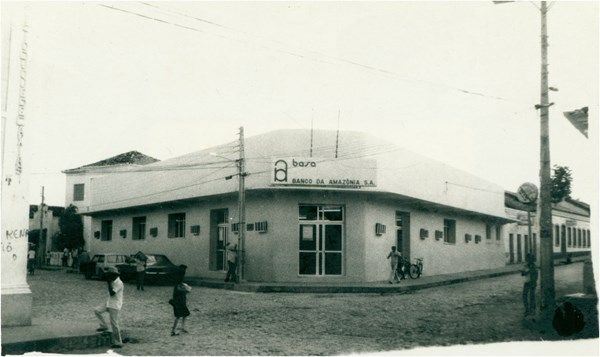
In 1950, the bank's name was changed to Bank of Amazon Credit and the objectives were expanded. As a result, the financial institution began to serve productive activities aimed at the industrial sector, as well as commerce and agriculture in the North region.
In addition to expanding services, the bank began to promote the trade and industrialization of rubber in all states of Brazil. Later, in 1966, when it took on the role of financial agent for the Federal Government's policy, the bank changed its name to Bank of the Amazon S/A, acting in the development of the Legal Amazon.
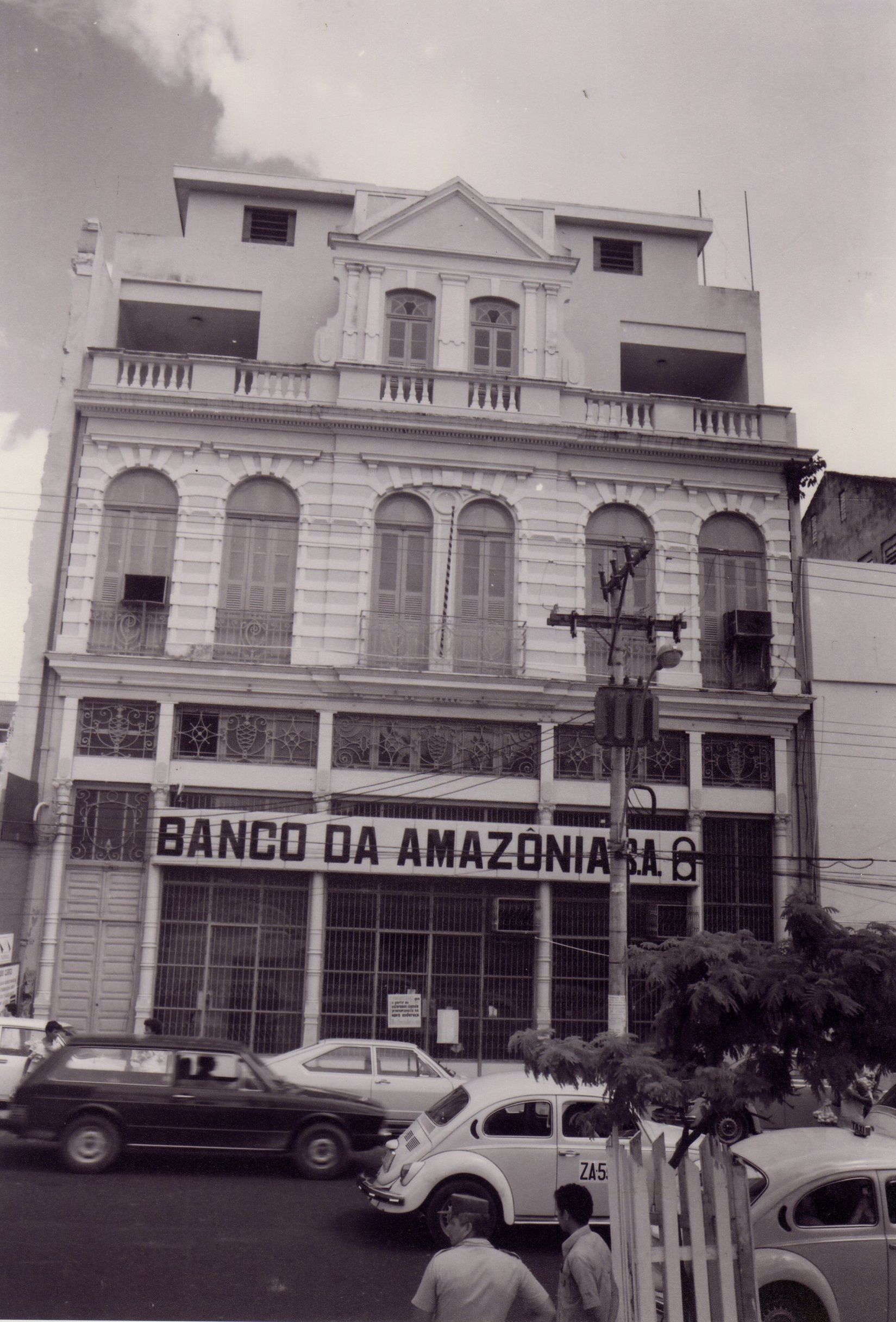
By 2002, the Bank of the Amazon launched the brand we know today, at the same time it celebrated 60 years of history. In addition, the financial institution reinforced its role as a commercial bank and developed techniques and services that met the needs of clients.
During the same period, the acronym BASA ceased to be used to refer to the bank. As a result, all signatures began to be made with the full name of the bank, Bank of the Amazon. This action served to emphasize the name Amazon and give due recognition to the area that is so important for Brazil.