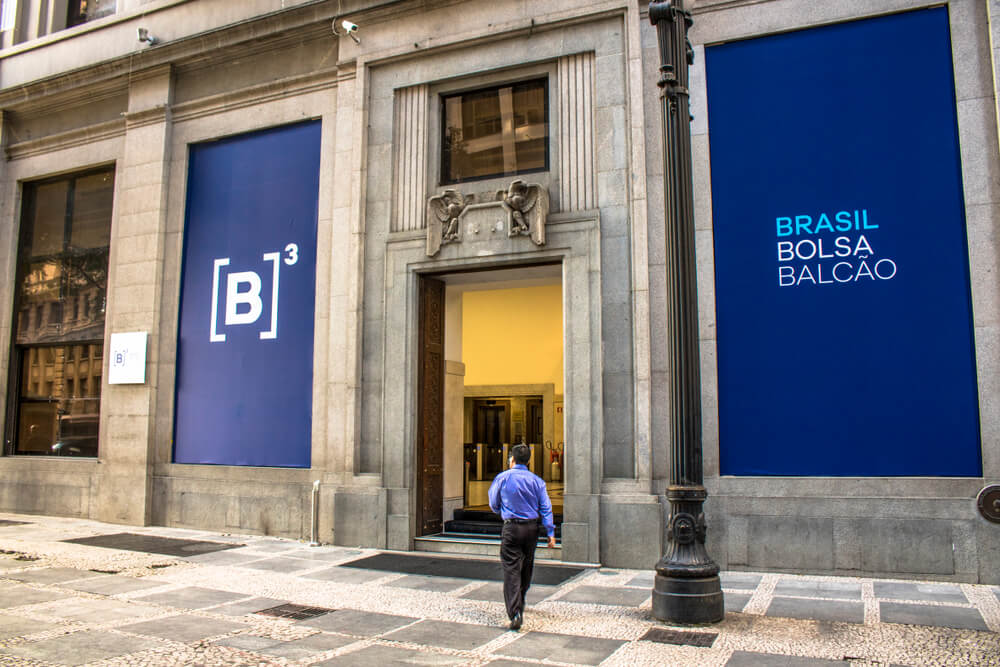
At first, B3 – Brasil, Bolsa, Balcão is the company that makes the stock exchange of Brazil happen. In this sense, it provides all the infrastructure and technological support for the registrations, negotiations, post-negotiations, and all activities related to the Brazilian financial market.
B3 has characteristics that make it unique in this business and represent certain competitive advantages:
Diversified asset model and vertically integrated
Unique infrastructure integrated into the financial system
Constant and innovative product development
Financial solidity focused on cash return to shareholders
Shareholding structure dispersed with specialized governance in the market
Business Model
B3 operates with a diversified portfolio of products, enabling the market to conduct operations in stocks, stock derivatives, fixed income securities, fund shares, federal public securities, and spot currencies. Also, within the scope of listed products, it offers listing and central depository services for the assets traded in its environments, as well as data distribution related to these markets. Last but not least, it provides infrastructure for the registration of financial instruments by banks and customized derivatives, and services that accelerate the analysis and approval process for credit in the national territory for vehicle and real estate financing.
To analyze the company's operations, we can divide its businesses into the following segments:
Listed market:
Stocks and variable income instruments
FICC – Interest, Currencies, and Commodities
Over-the-Counter Market
Infrastructure for financing
Technology, data, and services
Listed market
In this category of products and services, B3 can benefit from both the economic cycle, interest rates, and the sophistication and risk appetite of investors, as well as the volatility of the financial market. When analyzing such categories, we can perceive the following landscape:
Stocks and variable income instruments
In this scenario, the company offers various trading products and services, including:
Spot market: including not only the negotiation process but also the post-negotiation
Derivatives: including similarly negotiation and post-negotiation
Variable income depository
Securities lending
Listing and solutions for issuers
The products of the spot market include all securities issued by governments, financial institutions, and corporations. In other words, the company profits from all operations carried out daily with stocks, real estate funds, investment fund shares, among others listed in its trading system.
To achieve this, the Company has a Central Depository (CSD) that fulfills its role of storing the securities of each investor, meaning it constitutes a Clearing house to minimize the settlement risks of financial operations. Thus, B3's integrated Clearing performs the registration, acceptance, clearing (CCP²), settlement (SSS³), and counterparty risk management of financial market operations.
The products in the derivatives class include futures contracts for dollar, index, soy, cotton, live cattle, coffee, corn, among others; and the options market, which can be defined as a monetary value that guarantees the right to buy or sell an asset.
B3 operates with the main central depositories in the Brazilian market. The first is the Central Custody and Financial Settlement of Securities (CETIP), which oversees private fixed income securities such as CDBs, LCIs, and LCAs. The second is the Brazilian Clearing and Custody Company (CBLC), an associate of B3 that oversees the stocks and securities traded directly on the Stock Exchange.
Additionally, the Company can profit from securities lending operations, which allow short selling in the financial market.
FICC – Interest, Currencies, and Commodities
In this class of products, B3 can generate revenue from interest derivatives operations in both domestic and foreign currencies. More than that, it also benefits from exchange rate and commodity derivatives contracts. Therefore, it can take advantage of the volatility and the sophistication and risk appetite of investors.

Over-the-Counter Market
In the OTC market, the company is exposed to the development of the corporate debt market and the sophistication of the market. Thus, it operates with a registration Central (with and without CCP), the Depository (CSD) and with custody. Basically, custody represents the systematic safekeeping process of assets, in which stocks, securities, and other goods are held and updated by third parties, on behalf of their owner, and for this, there is a charge of the so-called custody fee from B3.
Still in this category, its main sources of revenue are fixed income instruments such as bank capitalization, debentures, direct treasury, and fund shares, and OTC derivatives that include all those previously explained derivatives and the COE (Certificates of Structured Operations). Simplified, in addition to those simpler derivatives operations, B3 provides the registration of more complex OTC derivatives operations, without CCP, called Structured. The COE blends elements of Fixed Income and Variable Income and was launched in the Brazilian market in 2014, akin to Structured Notes, which are very common in Europe and the United States.
Infrastructure for financing
This large company in the financial market can still benefit from the expansion of credit and economic development. In this context, it operates through the National System of Liens – SNG, the Contracts System, and the Real Estate Platform.
The National System of Liens – SNG manages the financial restrictions placed on vehicles given as collateral in credit operations in the country. In summary, it allows financial institutions, leasing companies, and consortium administrators to consult any restrictions on the vehicle offered as collateral before concluding the credit operation.
The Contract System is the most comprehensive solutions platform in the market, composed of receiving, custody, and transmission of vehicle financing contract information to state traffic agencies, the Detrans across Brazil.
The Real Estate Platform is B3's tool to automate and standardize property appraisal processes. In partnership with FNC, an American leader in data technology for the real estate sector, the platform integrates banks, appraisers, notaries, and regulators through a system that automates and organizes the entire appraisal and submission of information to financial institutions. Thus, B3 can not only be agile in responding to credit release but also manage all guarantees in the real estate market.
Technology, data, and services
Clearly, technology and data processing are intrinsic characteristics of B3's business. With this, it can operate diversely and provide data, analytics, and other services for the financial market. In the scope of Technology and access, the Company primarily operates with the processing of TEDs, which has been increasing every day. As for Data and analytics, it plays a broad role by possessing all trading data and analytical reports in the listed market and in the over-the-counter market, as well as in the infrastructure segment for financing. Additionally, it conducts data inquiries for different segments and licenses indices. To handle the massive volume of data that accumulates in the financial market, it has the following initiatives that operate with customized solutions to securely, standardly, efficiently, and extremely quickly store information exchanges:
To conclude, the company also has the Banco B3, a clearing institution that plays a fundamental role in the custody of investment funds, in addition to representing non-resident investors. Thus, it is the depositary institution for the so-called BDRs – Brazilian Depositary Receipts, which are essentially securities issued in Brazil but represent another security issued by publicly traded companies based abroad.
B3 Data Centers
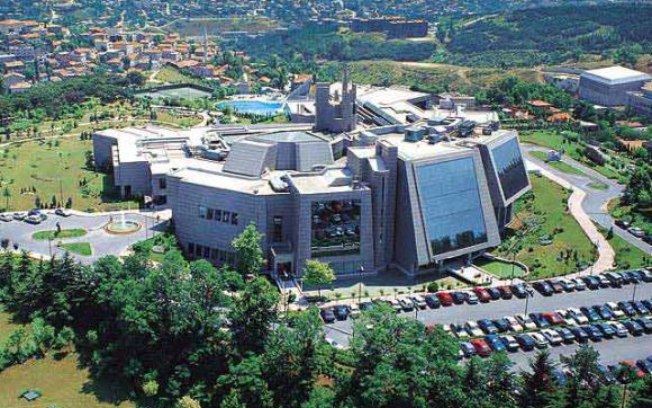
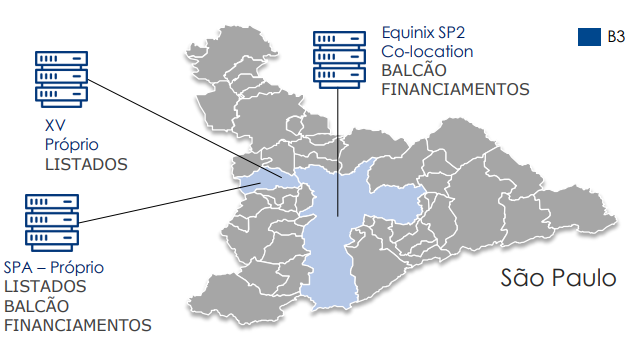
In order to store the massive volume of data, Brasil, Bolsa, Balcão requires an organized and very secure environment for storing and processing information. In this sense, it has Data Centers that not only technologically support the Company's financial businesses but also provide solutions for co-location of trading infrastructure, services, and facilities to this industry in Brazil and worldwide.
The Co-location is a clear example that its businesses are not limited to daily operations in the financial market. This service allows B3's clients to occupy a position in the Data Center to store their servers, equipment, and applications. At the same time, all support for climate control, physical security, and electrical power is provided, which constitutes an excellent option for companies that choose not to build an internal structure specialized in this storage technology and seek greater speed, performance, and reliability.
In summary, this service can be defined as an ecosystem formed by investors, service providers, brokers, managers, banks, and their suppliers, providing unprecedented interconnection services that bring together the largest market players and enhance the business opportunities for those who have access to this environment.
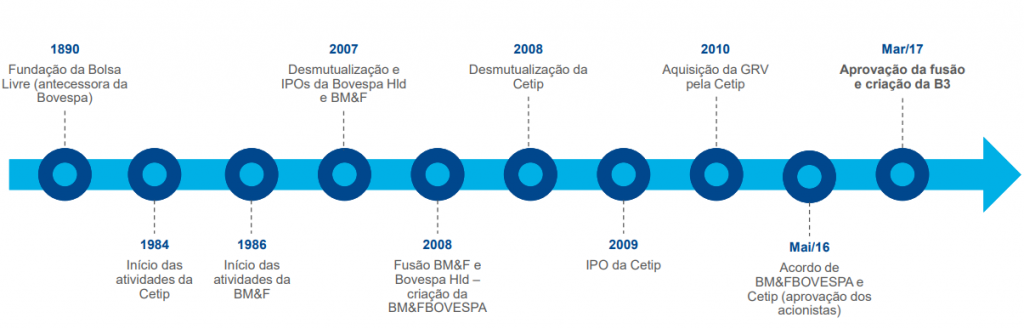
The entire history of the current Brazilian stock exchange begins in 1890, the year the Bolsa Livre, the predecessor of Bovespa, was founded by capital trader Emílio Rangel Pestana. Newly formed, the Exchange lasted a short time, just over a year, being reopened later in 1895, now named the Bolsa de Fundos Públicos de São Paulo. In 1935, after nearly half a century of maturation, it changed its name again to Bolsa Oficial de Valores de São Paulo and only in 1967 did it receive its identity that is so recognized today: Bovespa, the São Paulo Stock Exchange.
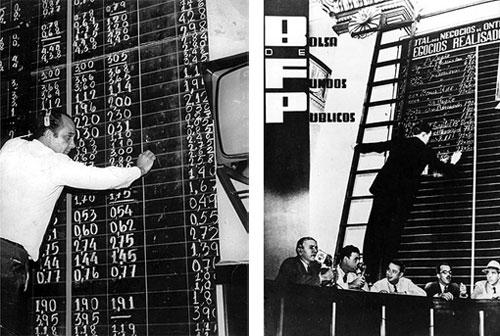
Initially, Bovespa and the other Brazilian exchanges, totaling one per state, were official corporate entities, controlled by state finance secretariats, the current Secretarias da Fazenda. Concurrently with the financial system reforms of the 1960s, the Exchange became administratively autonomous and assumed a more institutional characteristic, at the time non-profit. At this moment, the figure of the floor trader emerged, as well as the model of brokers in society to assist financial operations.
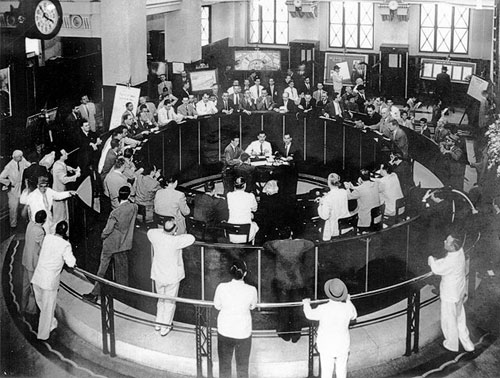
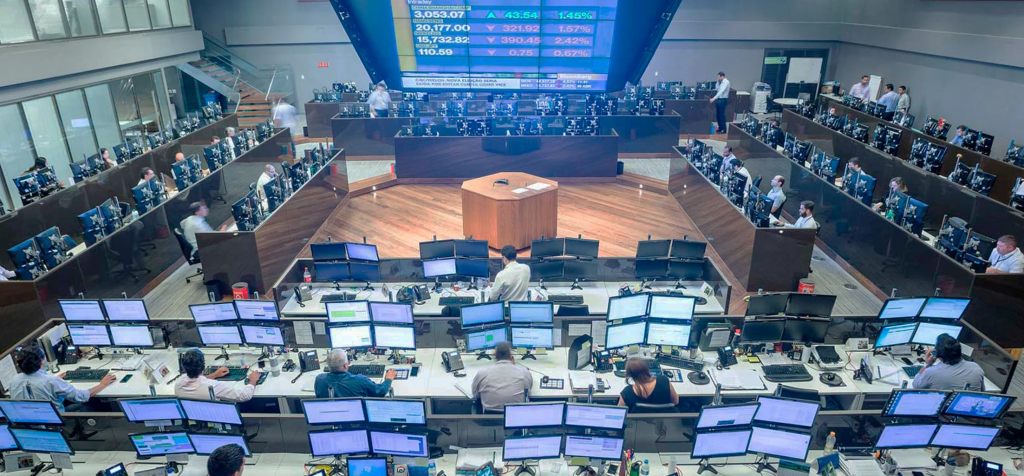
Throughout its history, technological innovation has always gone hand in hand with the evolution of the financial environment of the Exchange. To give an idea, starting in 1970, trades were already being conducted and recorded electronically through punched cards, something that began to be done in real-time. Incredibly, by the end of this decade, the Stock Exchange already had options trading as one of its products.

In 1984, CETIP was founded with the support of the Central Bank, which began its operations in 1986. By 1990, operations began through the Electronic Trading System, which began to consolidate at the expense of open outcry trading. As a result, in 1999, the Stock Exchange took a big step and created the Home Broker, which would allow sending buy and sell orders via the internet. The year 2005 was marked by the end of trading in the old open outcry model, making operations on the Exchange entirely electronic.
In 2007, the Exchange ceased to be a non-profit society and became a company called Bovespa Holdings. The following year, the merger between Bovespa Holdings and BM&F occurred, constituting the new exchange: BM&F Bovespa.
At the same time, CETIP also became a for-profit society in 2008 and incorporated Andima, making it responsible for the rights over the National Debentures System, the Distribution System for securities and contracts, and intangible assets. It was then in 2009 that CETIP went public on the Stock Exchange. CETIP's expansion continued in 2010, through its acquisition of GRV Solutions. Thus, it became capable of operating in the consumer credit segments and began offering financial solutions to other institutions.
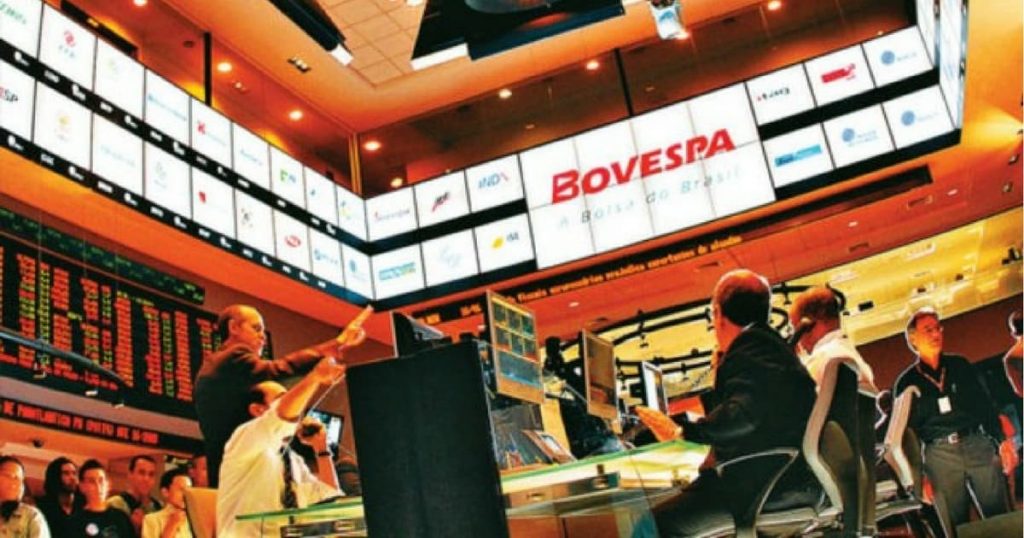
In 2011, BM&F Bovespa expanded its technological park with a large investment in technology, launching at the time the PUMA Trading System trading platform. Soon after, it began construction in 2012 of its new Data Center. CETIP, in turn, created the Real Estate Platform in 2013 to make the real estate credit process more agile and efficient.
The milestone for the establishment of the current Stock Exchange occurred in 2016, when the Board of Directors of BM&F Bovespa and CETIP approved the merger of their operations. As a result, the merger was approved in 2017 by regulatory bodies, and thus B3 – Brasil, Bolsa, Balcão was born.