Company Data
CNPJ
Market Cap
Number of Shares
Listing Segment
IPO Date
Key Indicators
P/E
P/VP
DY
Tag Along
Free float
Viability Seal

We use cookies that are necessary for the site to work and, with your permission, analytics and marketing cookies to improve your experience. You can accept all of them or choose what to allow.
Company Data
CNPJ
Market Cap
Number of Shares
Listing Segment
IPO Date
Key Indicators
P/E
P/VP
DY
Tag Along
Free float
Viability Seal
See what thousands of investors think and vote on the assets you consider viable
Eu tenho essa empresa na minha carteira. Eu gosto da empresa, sempre pagou bom dividendo e sendo uma empresa da minha cidade é uma empresa que eu tenho como algo fora do meu operacional. Aqui na cidade sempre foi uma ótima empresa para trabalhar e muito bem falada pelos funcionarios. Ta muito bom para aumentar a posição. Sei que o setor ta passando por dificuldades agora, mas é uma empresa muito antiga e passou por diversas crises.
Company Data
CNPJ
56.720.428/0001-63
Market Cap
R$703M
Number of Shares
93.17M
Listing Segment
NOVO MERCADO
IPO Date
3/23/2007
Key Indicators
P/E
7.78
P/VP
0.56
DY
6.85%
Tag Along
100.00%
Free float
50.83%
Viability Seal
Find out whether the asset is viable or a dud
Loading data
Loading...
Discover whether an asset is an opportunity or a risk through our seal.


CASH3
Méliuz S.A

PETR4
Petróleo Brasileiro S.A Petrobras

ABEV3
Ambev S.A

ITUB3
Itaú Unibanco Holding S.A
The stock is undefined relative to the fair price by the Graham formula.
R$7.59
The stock is undefined relative to the fair price by the Bazin formula.
R$7.59
ROMI is a company that operates in the machine tool market and machines aimed at plastic processing, being a leader in its segment. The company also operates in the production of castings and machined parts, exporting its products to all continents.
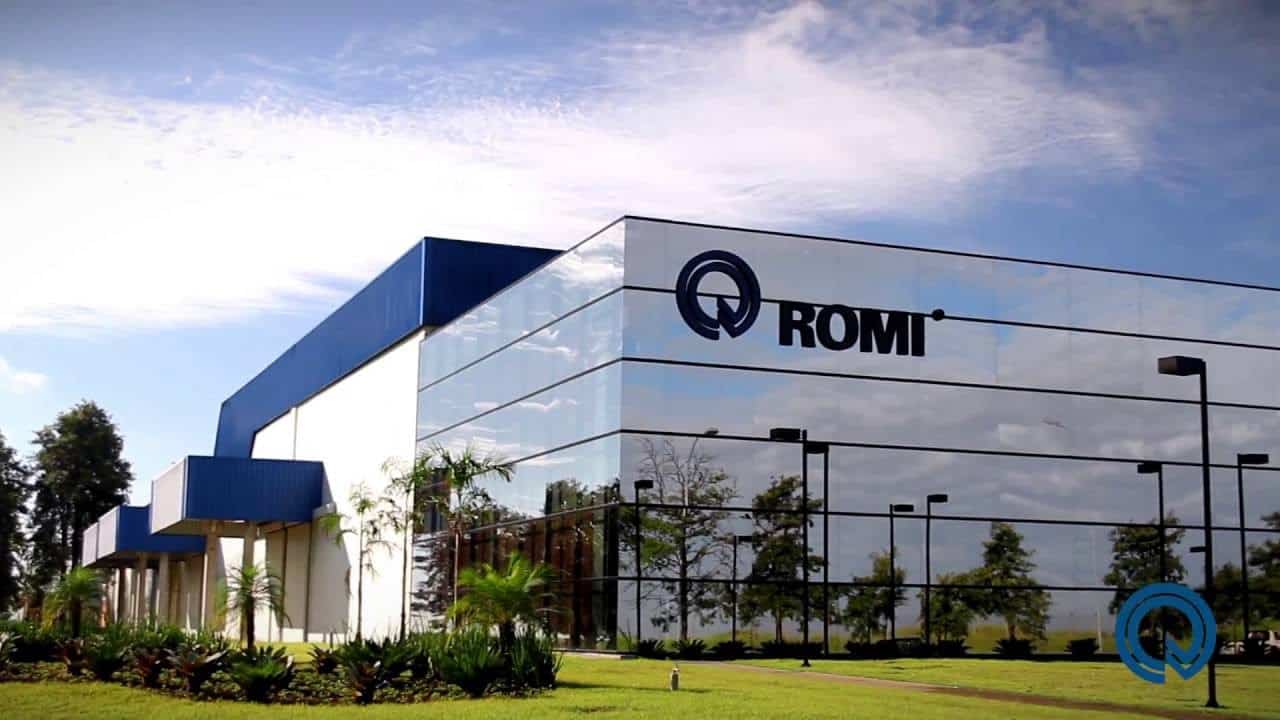
The company is responsible for supplying products to various sectors of the industry, such as aerospace, manufacturers, defense, automotive supply chain providers, agricultural machinery and implements, consumer goods in general, industrial equipment, etc.
In addition, ROMI is known for its established brand in the market, as the company has been producing and exporting its products since 1944, with a distribution network both in Brazil and across the five continents of the world.
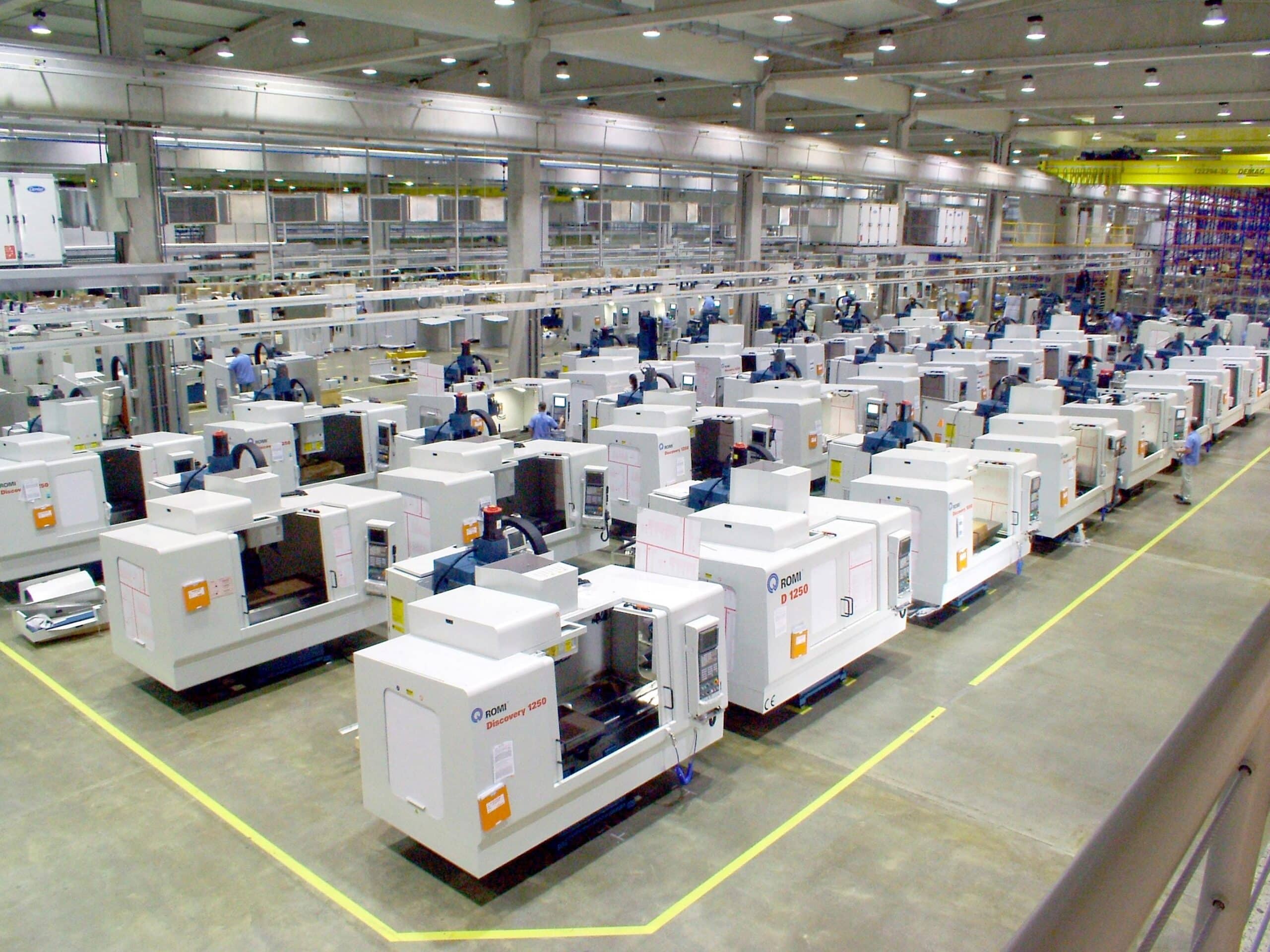
The company has a total installed production capacity of 2,900 machines per year. Regarding the production capacity of castings, the company has approximately 50,000 tons per year.
Among the industrial sectors that the company serves, we have:
Industrial machines and equipment;
Agricultural machines and implements;
Defense;
Aerospace;
Manufacturers;
Consumer goods in general;
Automotive supply chain providers.
Among the products that are part of Romi's portfolio, we have:
Gray and ductile cast iron parts, supplied either raw or machined;
Machine tools, mainly Turning Centers, CNC lathes, conventional lathes, machining centers, and boring machines;
Machines for plastic processing.
Romi's history began in 1930 when Garage Santa Bárbara was founded. Initially, the company started with work focused on automobile maintenance. By 1934, the company inaugurated its first foundry, where it began to market various models of agricultural implements.
Later, in 1938, the company changed its corporate name to Máquinas Agrícolas Romi Ltda. Two years later, the company built a table planer intended for the manufacture of lathe beds. In 1941, Romi began the production of machine tools under the Imor brand, starting with the TP-5 model.
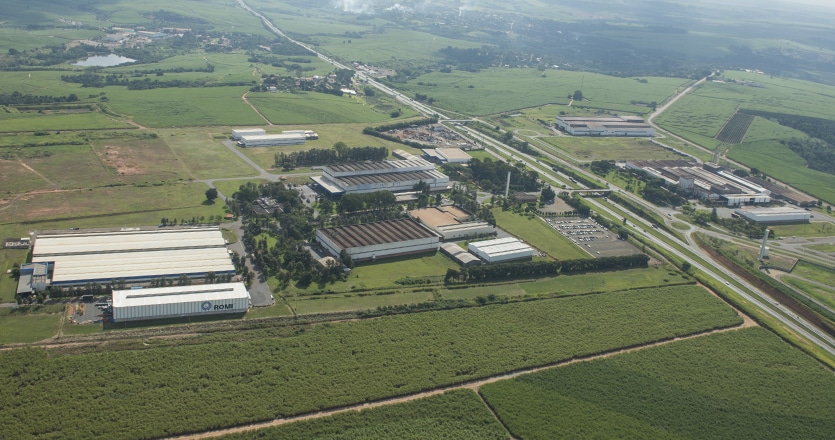
With the increase in production numbers, in 1994, the company reached the milestone of 1,700 lathes produced and, in the same year, began exporting to Argentina. In addition, that year also yielded an industrial headquarters, with 12,000 m² of production.
In 1948, the company launched the Toro tractor, being the first tractor manufactured in Brazil. Production surged when, in 1950, the company invested in products from the USA and England to enhance the production of new lathe models.
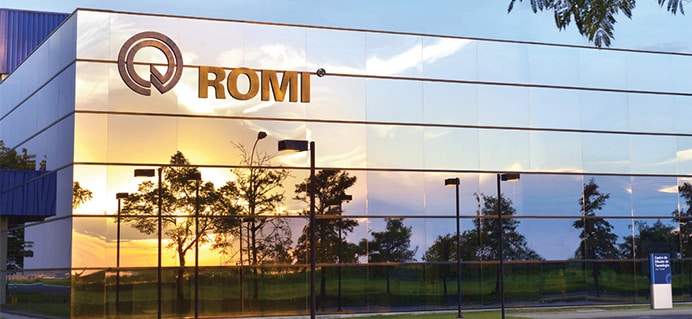
The company's growth was so significant that, in 1955, Romi announced the production of the first Brazilian car. The production received a license from Iso, Italy, and the company managed to produce the Romi-Isetta.
In Europe, especially in Germany, the first Brazilian car became a success, as it was produced by BMW. In 1956, the company launched the Romi-Isetta, with a production projection aimed at one thousand units per year.
In 1961, the company stopped the production of the Romi-Isetta and, in the following year, changed its corporate name again to Indústrias Romi S.A. Consequently, the company inaugurated a headquarters in São Paulo. By 1967, Rominor was inaugurated in Recife.
Currently, Romi is an internationally recognized company, where its products and services are consumed both in the domestic market and abroad. In addition, the company supplies various sectors of the industry.