Fleury is a company in the health segment on the stock exchange, providing laboratory services in the premium segment (High standard). In summary, its operating model is based on two branches:
Thus, in the health segment, the company is known as one of the leading players in the field, also being one of the most traditional in the country in the sector of diagnostic medicine.
The company performs various tests each year, around 75 million, in addition to 5 million imaging tests. Through the tests – which utilize high-level technology – the company focuses primarily on preventing diseases through rapid and accurate diagnosis.
In total, there are 187 service units spread across eight states in Brazil: São Paulo, Rio de Janeiro, Rio Grande do Sul, Paraná, Bahia, Pernambuco, Rio Grande do Norte, and Maranhão, as well as the Federal District. As a result, the company employs approximately 10,000 employees.
How did Fleury (FLRY3) come to be?
The history of the Fleury Group began in 1926, when Gastão Fleury da Silveira, created what we now know as the company that encompasses various businesses.
Initially, the company was just an analysis laboratory, created by the newly graduated Gastão Fleury. Above all, the backdrop for the creation of the group involved the academic environment.
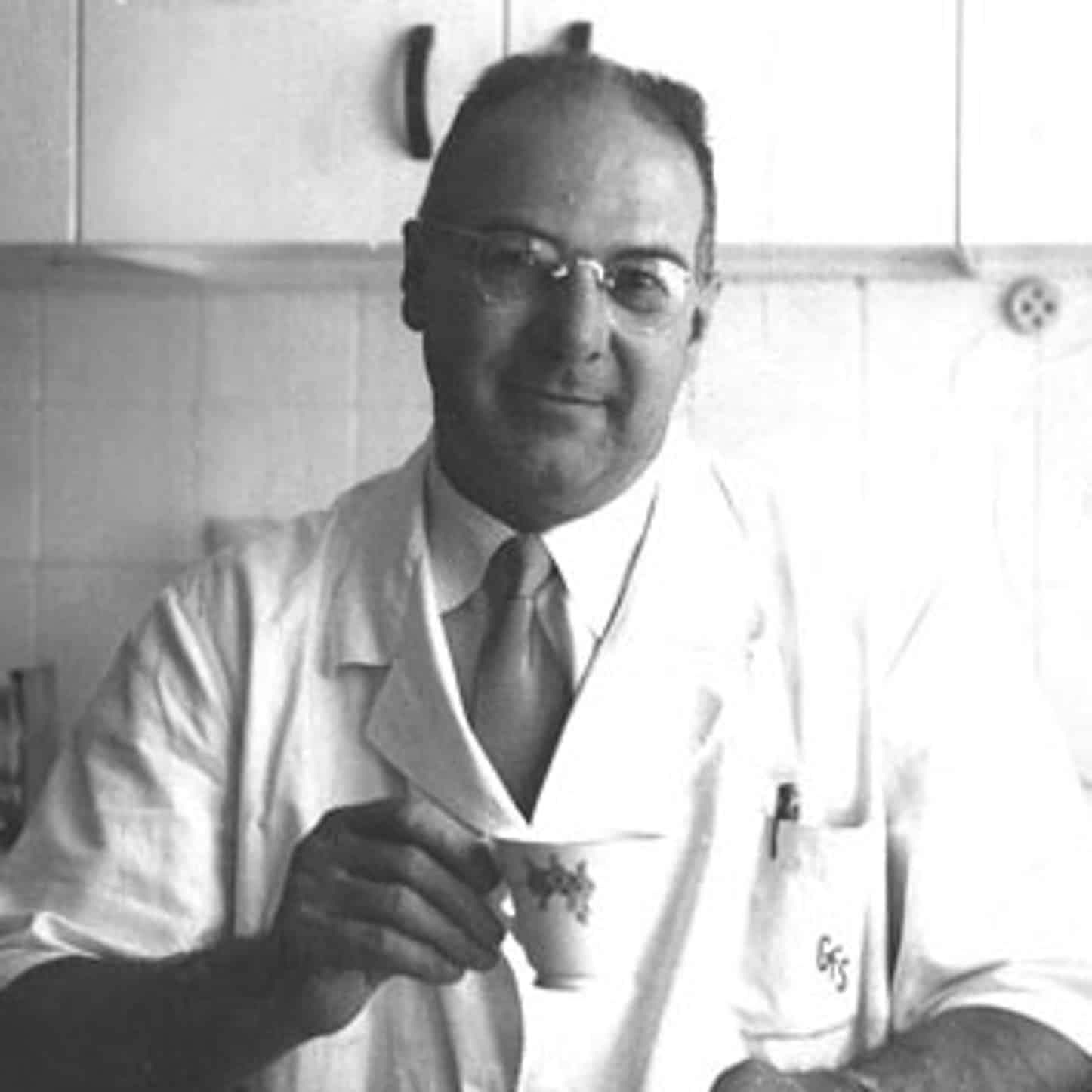
Gastão Fleury Silveira
This is because the company aimed to cooperate, in a technical-scientific manner, with the best universities in the country. After ten years of its founding, in 1936, Walter Sidney Leser became a partner in the company.
Leser was responsible for proposing the first of many acquisitions by the company in 1951. That year, the company merged with a group of partners responsible for offering a greater quantity of products.
The group of partners consisted of a specialist in each area of clinical pathology, which unparalleled expanded the products offered by the company.
First steps to becoming a network business
In 1962, the Fleury Paraíso unit was inaugurated, marking the beginning of its second service unit. In this sense, from the opening of the second unit, the concept of unit networks was born, which is now the foundation of the company.

Fleury Paraíso
For many investors, this was the moment when the company ceased to be just a laboratory. Therefore, with a new unit, activities were distributed, expanding the operations of the Fleury brand.
Fleury (FLRY3) in the digital age
As the company developed, the digital era also began. In 1982, for example, the group started implementing information and internet systems in the company's operations.
In the same year, FLRY3 began using online systems for customer service. Indeed, today, the company is one of the few that offers results online, a testament to its digital pioneering.

In the following years, the company implemented a diagnostic center system, integrating laboratory solutions in one place. Surely you don't find this remarkable nowadays, but for the sector, it was an innovation.
Thus, by providing various solutions in one place, collection and analysis were conducted by the same center. This practice provided, in addition to safety, agility, and ease in the company's operations.
Dynamic management model
In the mid-1987, the group diversified its management model. That is, the company was run by 19 doctors with equal shares.
As a result, a compulsory retirement system was also established to protect the business from family disputes.
The bold management model enabled the company to begin its expansion process in 2001, a hallmark of the group.
Growth of the Fleury group (FLRY3) through acquisitions
The growth of the Fleury group began with the establishment of acquisition procedures for companies.
This type of growth is called non-organic, where the company must increase its production capacity to boost revenue.

With this in mind, the group adopted an active strategy in acquiring relevant and popular brands in a given region.
Thus, the company acquires a business and, behind the operations, provides all the power that the brand has in operational terms.
Entry into the stock market as FLRY3
The accelerated growth process led the company to go public in 2009. Thus, the date served to consolidate the company's expertise, which, in previous years, was the first to provide its results online, in 2002.
With the funds from the IPO, in 2011, the company launched a new segmentation through another acquisition. With the acquisition of a+ medicina diagnóstica, the Fleury group enters the mid-range segment.