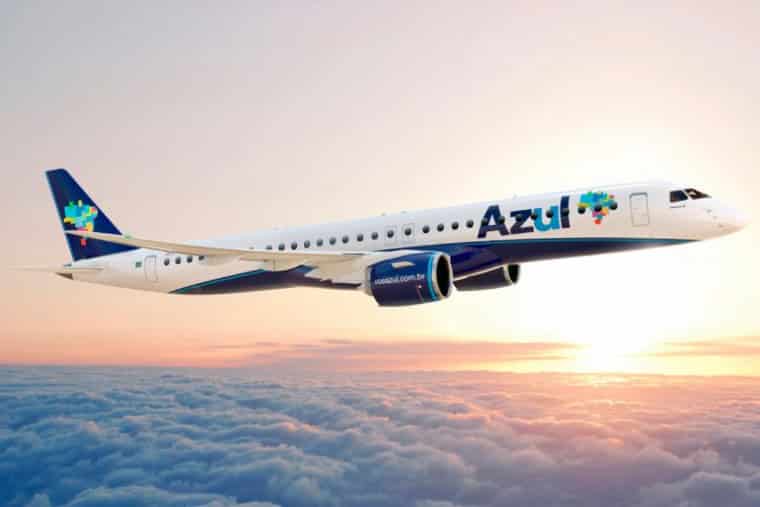
Azul is a Brazilian company belonging to the class of airlines. In this sense, it offers passenger transport services at airports in various countries, maintaining a whole structure of aircraft and other infrastructures to manage routes and flights around the world.
The Company operates with a differentiated business model, with some characteristics that add value to its business, such as:
Market leadership and air routes in Brazil
Diverse fleet of aircraft
Strong brand recognition
Exclusivity of air routes and services
International presence with joint ventures
Market positioning
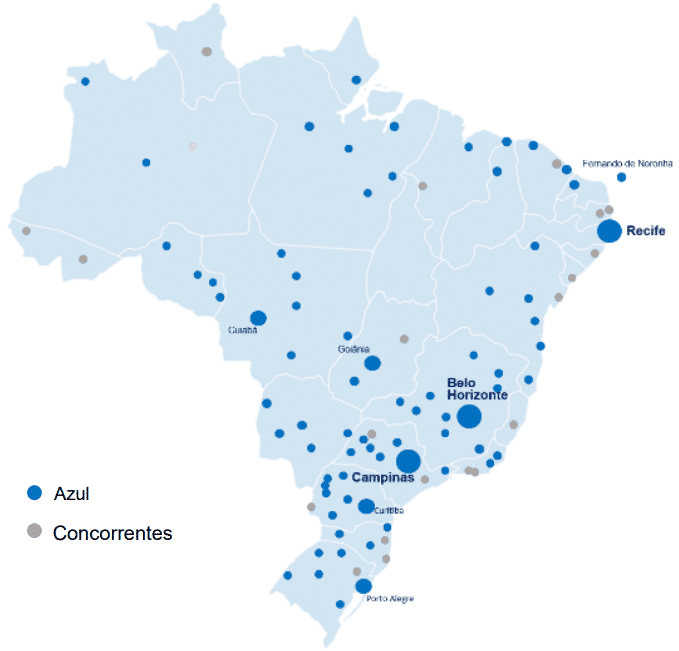
Azul is considered the largest in terms of takeoffs and cities served in Brazil. Operating about 916 daily flights, serving more than 110 destinations in total, resulting in a network of nearly 250 routes. In absolute numbers, Azul holds 30% of the total takeoffs in Brazil.
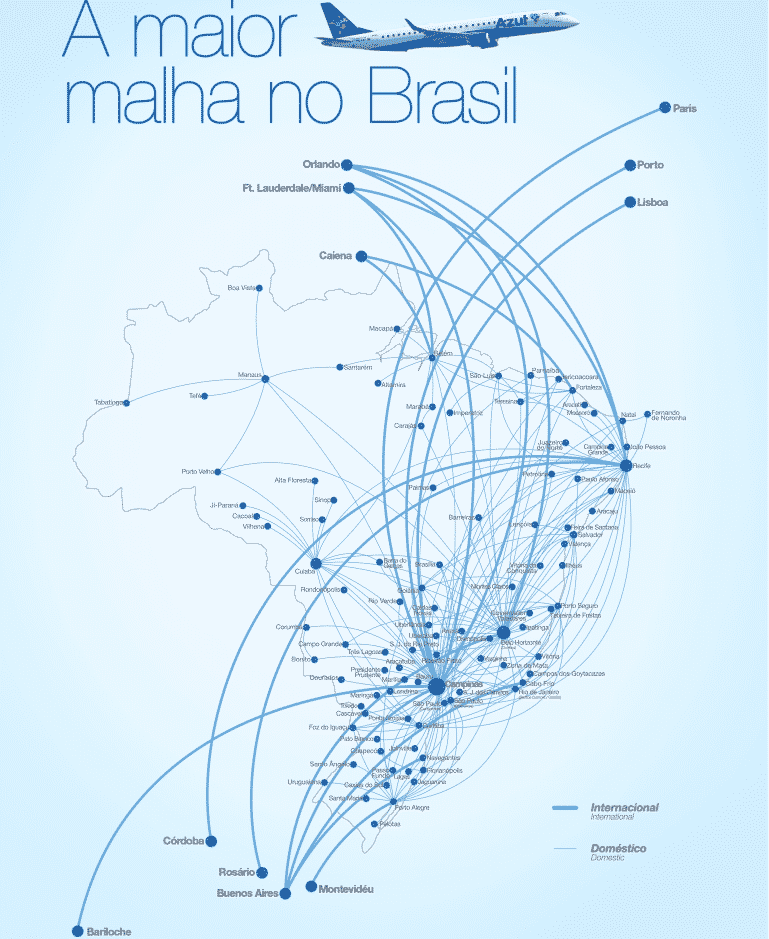
Azul not only operates in Brazil but also flies to more than 10 international destinations, including major cities such as:
Buenos Aires
Montevideo
Rosario
Bariloche
Fort Lauderdale
Orlando
Lisbon
Porto
Paris
This international presence is greatly strengthened by partnerships established through two types of agreements with companies worldwide. Azul has 7 Codeshare agreements, in which airlines transport passengers whose tickets were issued by another airline, with the companies:
Avianca
JetBlue Airways
TAP Air Portugal
Turkish Airlines
United Airlines
Copa Airlines
Ethiopian Airlines
In addition, it has 27 Interline agreements, in which one can sell segments controlled by the other company, with airlines owning important brands such as:
Air France
Lufthansa
South African Airways
Emirates
Qatar Airways
Air Canada
Fleet of aircraft
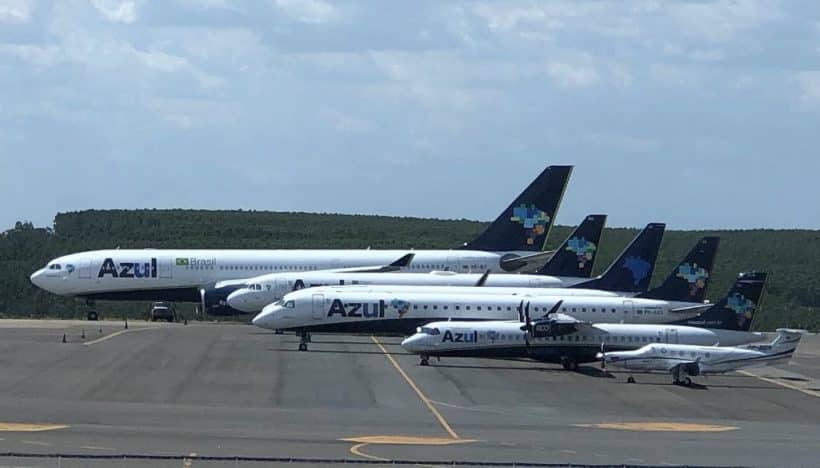
In general, Azul has basically 4 general classes of aircraft, which are:
Cessna Caravan
ATRs
E-jets
A320neo
1. The category Cessna Caravan includes the smallest number of aircraft in the company and is characterized by small models, with only 9 seats.
2. The ATR line consists of the aircraft ATR-42 and ATR-72. This category includes small models. Thus, they have a total of 70 seats and operate flights with an average stage of 391 km.
3. The E-jets include the medium-sized aircraft from the series Embraer 170, Embraer 175, Embraer 190 and Embraer 195, with a number of seats between 106 and 136 and responsible for routes with an average leg of 701 km.
4. Finally, the line A320neo, the most recently acquired by Azul, groups larger aircraft such as the Airbus A320, with 174 seats and capable of making trips with an average leg of 1,475 km.
Its operations, especially on larger aircraft, always seek to offer more legroom than other domestic flights, in addition to the onboard service, which includes twelve types of snacks that customers can help themselves to at will, and onboard entertainment with individual monitors.
Each category has specific air routes, as well as there is always renewal and adaptation of new models, and inclusion or removal of models from the portfolio. Therefore, it seeks better operational efficiency with its means of transport, in order to reduce costs and offer greater quality and safety to customers.
Ground operations
Azul does not only offer air travel services, but also has a “branch” of logistics solutions and another of benefits club for customers, which is directly related to its main activity.
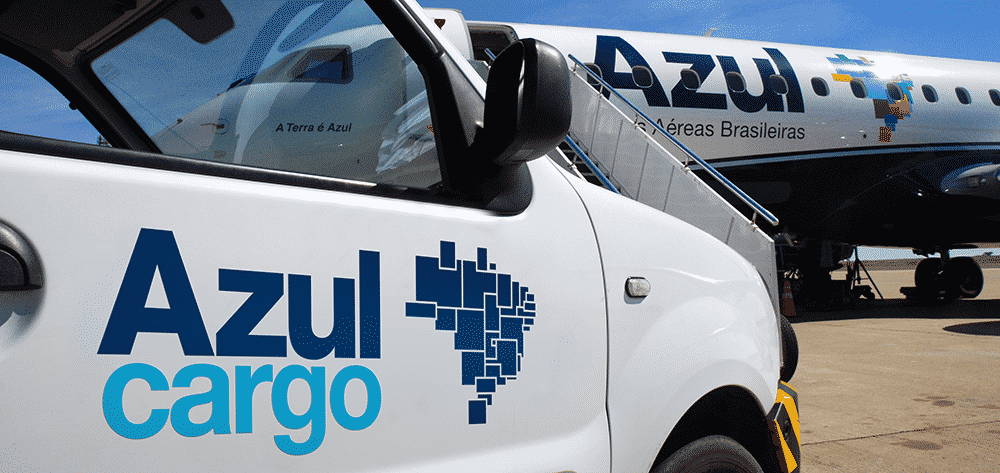
Azul Cargo Express
In this line of business, Azul blends its air logistics with the delivery of goods on demand to the customer's final address. Thus, it ends up turning the empty cargo hold space of its passenger flights into a useful space for transporting small express shipments.
Azul Cargo has more than 240 stores throughout Brazil, offering services that cover more than 3700 cities. However, it also offers the possibility of online service quotes, as well as the opportunity to collect the product to be delivered at the customer's own address, in addition to the tracking of items at any time digitally.
Clube Tudo Azul
In Azul's benefits club, the company allows its customers to accumulate points and miles and exchange them for airline tickets or products offered by partner companies. Thus, it makes products available in the so-called Shopping Tudo Azul, which sells items from renowned retail brands, such as:
Magazine Luiza
Via Varejo
Lojas Americanas
The points system is carried out together with important banking institutions, which enable the accumulation, withdrawal, and exchange of points system, namely:
Itaú Unibanco
Banco Santander
Banco Bradesco
Banco do Brasil
Banrisul
In this benefits program, customers gain increasingly greater advantages in the services offered by the Company as they accumulate more points and use its system more, returning greater quality and comfort to the customer in the flight experience with the company itself.

Universidade Azul
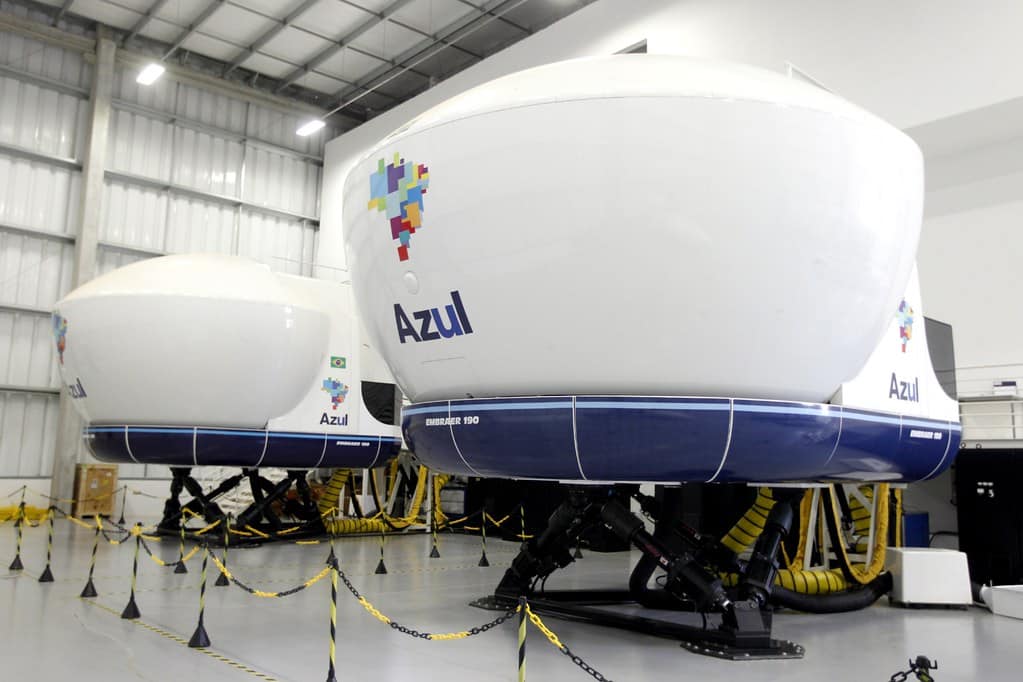
As if that weren't enough, the company also has a state-of-the-art training center for its employees. The so-called UniAzul , inaugurated in 2013, contains 60,000 square meters with 21 classrooms, totaling a capacity for 750 people. In this structure located in the city of Campinas-SP, the company offers 4 complete flight simulators equipped with dual HUD functionality.
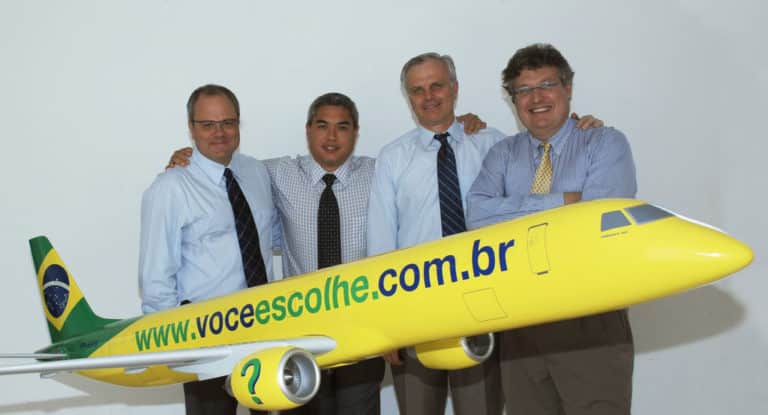
The history of Azul Linhas Aéreas began in 2008, when the founder David Neeleman offered customers the opportunity to choose the name of the future company in a successful online campaign .
The newly named Azul began its operations in a very competitive Brazilian air market divided between the former TAM and Gol Linhas Aéreas. Initially, its operations were concentrated in Campinas-SP at Viracopos airport, making trips that connected some capitals of the country. It was on December 4, 2008, that the company began selling airline tickets.
In January 2009, Azul created the executive bus service to transport its passengers between the metropolitan center of São Paulo and Viracopos airport in the city of Campinas. Incredibly, just 8 months later, it reached the milestone of 1 million passengers transported.
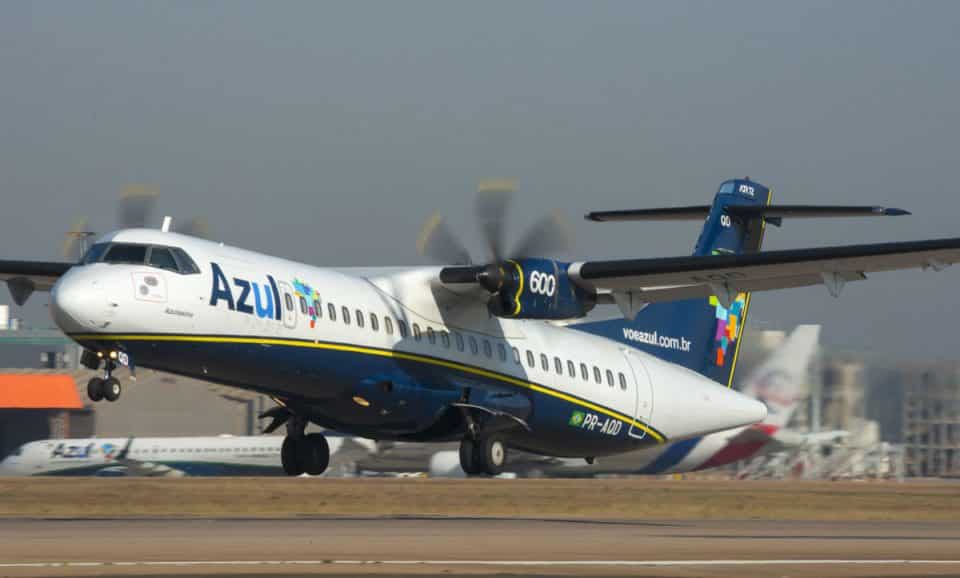
In 2010, the Company, seeking to expand its operations in the national market, purchased the ATR 72-600 aircraft model, a turboprop aircraft capable of carrying about 70 passengers on short-distance flights. As a result, it was able to enter airports with lower infrastructure and reach 42 destinations served by the end of 2011.
In 2012, the important merger with the company Trip took place, at the time one of the main regional airlines in Latin America. Consequently, the new Azul strengthened its positioning in the market, becoming the third-largest airline in Brazil at the time. This also allowed it to start operating in smaller airports in the northern region of the country.
In search of new horizons, Azul expanded its operations to the international scene in 2014, when it began purchasing Airbus A330 category aircraft. From then on, it added the city of Fort Lauderdale in the United States to its portfolio of destinations. Shortly thereafter, in December 2015, it began operating from Viracopos to the city of Punta del Este in Uruguay, and later began operating flights between Belo Horizonte and Orlando in the United States. The following year, it included two new destinations: connecting Porto Alegre to Montevideo, also in Uruguay, and between Campinas and Lisbon in Portugal.
Due to its enormous success, Azul received the award for the seventh consecutive year as the best low-cost airline in South America. Something that was also a reason for awards and recognition that same year was the punctuality with which it conducted its flights.

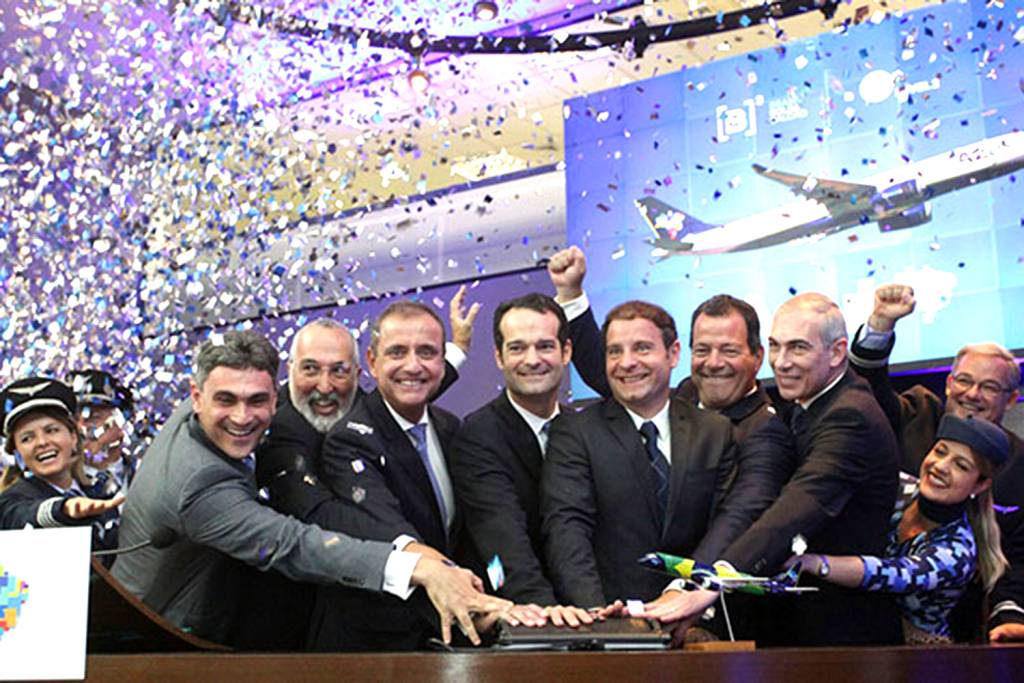
In April 2017, the Company's initial public offering took place. With this, it initially raised about R$ 2 billion, selling 63 million shares. In this context, 70% of the shares were sold to investors from New York, while the remainder was placed on the São Paulo Stock Exchange in the level 2 listing segment.
Azul Linhas Aéreas ended 2018 with the incredible mark of 32 ATR 72-600 aircraft, 63 E-Jets, 18 A320neo, and 7 Airbus A330-200, totaling 102 aircraft. More recently, in 2020, the company purchased Two Flex for R$ 123 million, an airline based in Jundiaí-SP, which offers passenger and cargo transport to 39 destinations in Brazil.
Thus, the Company incorporated new aircraft models into its fleet, expanding its operations and offering regional flights, as well as acquiring 14 slots located on the auxiliary runway of Congonhas airport that belonged to Two Flex.