
Asset unavailable:
Lack of update or deactivated.
Company Data
CNPJ
Market Cap
Number of Shares
Listing Segment
IPO Date
Key Indicators
P/E
P/VP
DY
Tag Along
Free float
Viability Seal

We use cookies that are necessary for the site to work and, with your permission, analytics and marketing cookies to improve your experience. You can accept all of them or choose what to allow.
Asset unavailable:
Lack of update or deactivated.
Company Data
CNPJ
Market Cap
Number of Shares
Listing Segment
IPO Date
Key Indicators
P/E
P/VP
DY
Tag Along
Free float
Viability Seal
See what thousands of investors think and vote on the assets you consider viable
Company Data
CNPJ
82.636.986/0001-55
Market Cap
0
Number of Shares
50.31M
Listing Segment
BOLSA
IPO Date
4/21/1988
Key Indicators
P/E
---
P/VP
---
DY
8.84%
Tag Along
Unknown
Free float
67.86%
Viability Seal
Find out whether the asset is viable or a dud
Loading data
Loading...
Discover whether an asset is an opportunity or a risk through our seal.


CASH3
Méliuz S.A

PETR4
Petróleo Brasileiro S.A Petrobras

ABEV3
Ambev S.A

ITUB3
Itaú Unibanco Holding S.A
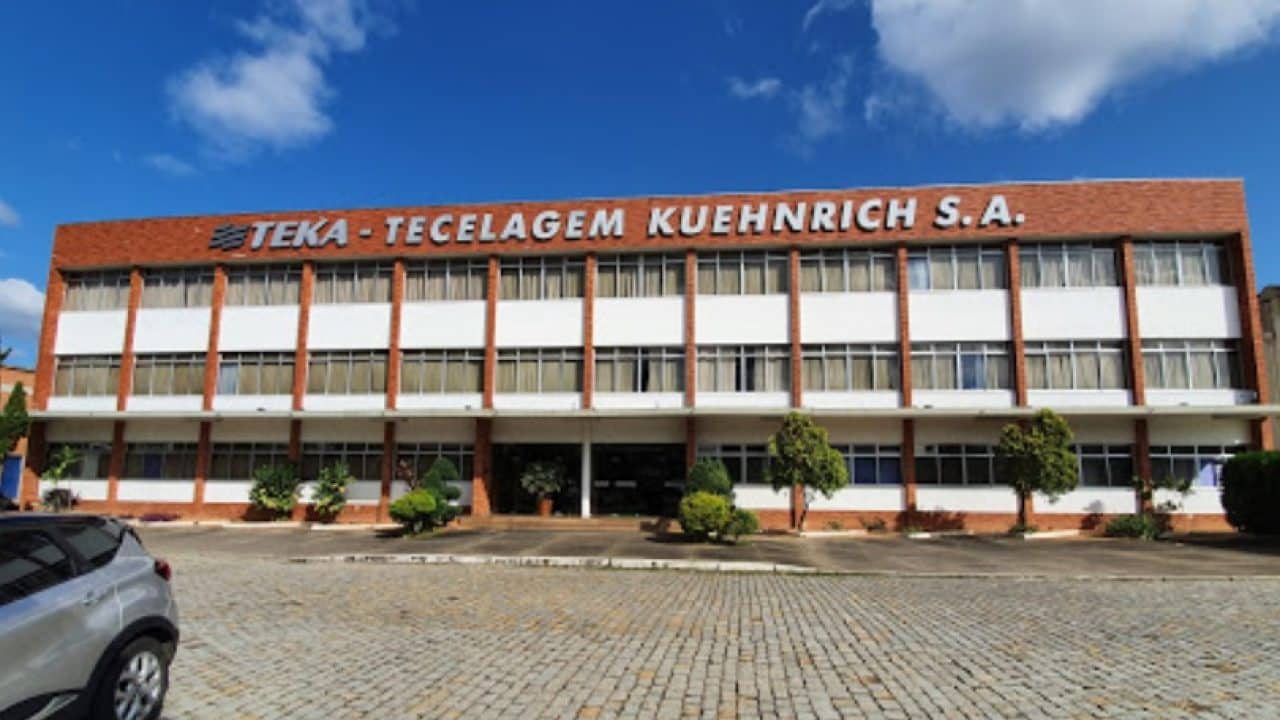
Teka Tecelagem Kuehnrich is one of the largest manufacturers of home, table, and bath products in Latin America.
The company's headquarters is located in Blumenau (SC) and the company has 3 manufacturing units in the cities of Blumenau, Artur Nogueira (SP), and Indaial. The production is divided according to the product.

Thus, the Blumenau factory, which has 70,510 m², focuses on the production of plush towels. On the other hand, the Indaial branch, which has 54,608 m², is dedicated to the production of Jacquard towels.
Finally, the unit in Artur Nogueira produces bedding, comforters, and quilted bedspreads. In total, the company produces about thirteen thousand tons of products annually, which are distributed throughout Brazil and abroad.
The history of Teka Tecelagem Kuehnrich began in 1926, when the company's first factory started operating in a space adjacent to the residence of its founder, Paul Fritz Kuehnrich.
In 1935, the company became a Corporation and changed its name to Companhia Kuehnrich S.A. Subsequently, the company's corporate name was changed to Tecelagem Kuehnrich S.A. in 1941.
In addition, the company's logo was changed to TK. After a while, the sound of the letters T and K ended up giving rise to the acronym TEKA.
As Teka is a short and easy word, it was quickly adopted by suppliers and customers and is still used today. The current logo, which consists of four strokes, represents the four activities that the company performs: spinning, weaving, finishing, and manufacturing.
In 1947, the first spinning mill was set up with a production of 50 tons of yarn per month, and in 1959, the company installed three tables for manual printing on frames to meet the growing demand for printed products.
In 1964, with the increase in production, the company acquired an 8-color Zimmer machine, one of the first to be installed in Brazil. In 1968, TEKA strengthened its presence in the international market by joining a government exemption program.
The first contract was signed at the Eastern Rand Show in South Africa. This opened doors for the company to sell its products worldwide.
The year 1983 was a challenging year for Teka. This was because the manufacturing park in Blumenau was flooded, resulting in the loss of tons of raw materials and damaging several machines. About 3,000 employees helped clean the company's buildings.
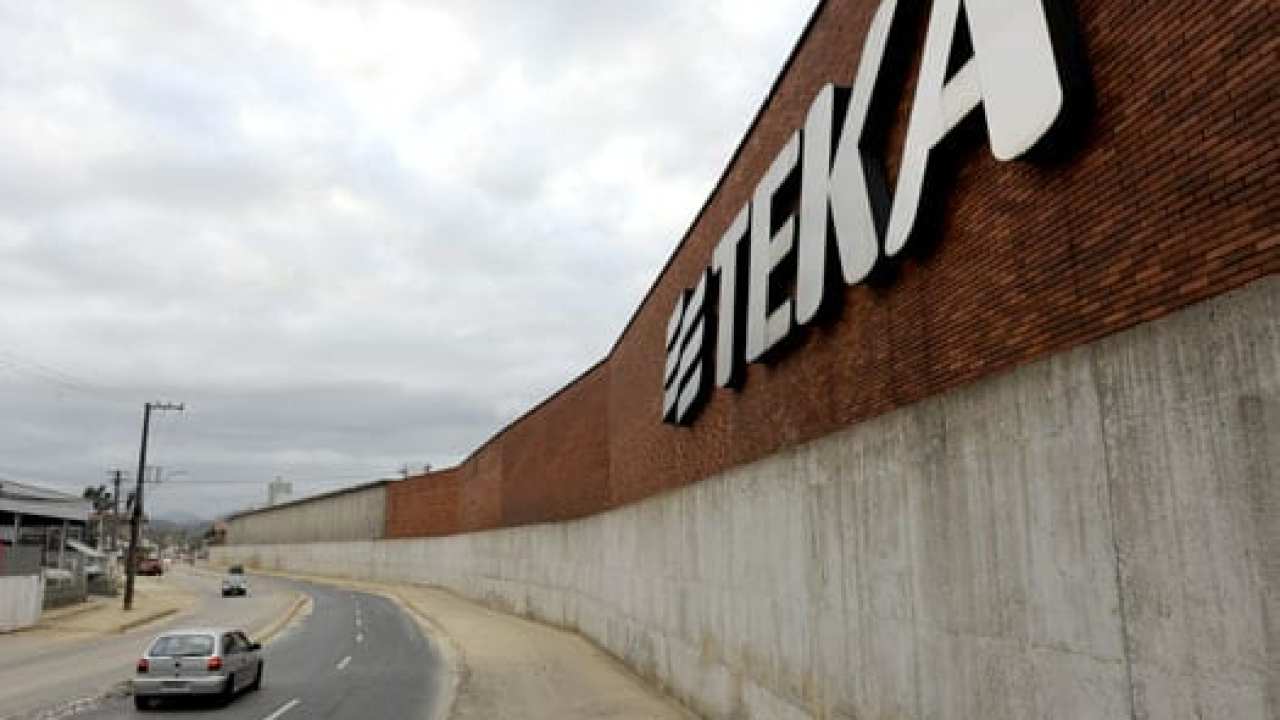
However, in 1984, this situation repeated itself. Thus, the company decided to build a wall. With a length of 829 meters and the capacity to contain floods of up to 17 meters, the wall received 8,000 m³ of concrete and 600 tons of steel.
The visible part of the wall has a height that varies between 2 to 6 meters. In addition to the wall, large galleries and tanks were also built underneath the company. In 1992, the level of the Itajaí-Açu River rose again, but the wall managed to prevent the flooding of the company.
In 1999, Teka received the ECO 99 award, which recognized corporate citizenship in the category of Environmental Pollution Control.
After this first award, the company received nearly 70 more awards recognizing the quality of its products and the social and environmental initiatives of the company.
The year 2015 was marked by the opening of Teka's first outlet, with products at special prices for the population of Blumenau and the surrounding region, as well as buyers from other Brazilian states who come to the city to learn about the company.


