Brinquedos Estrela is a Brazilian company that manufactures toys. With over 80 years of history, Brinquedos Estrela has marked many generations.
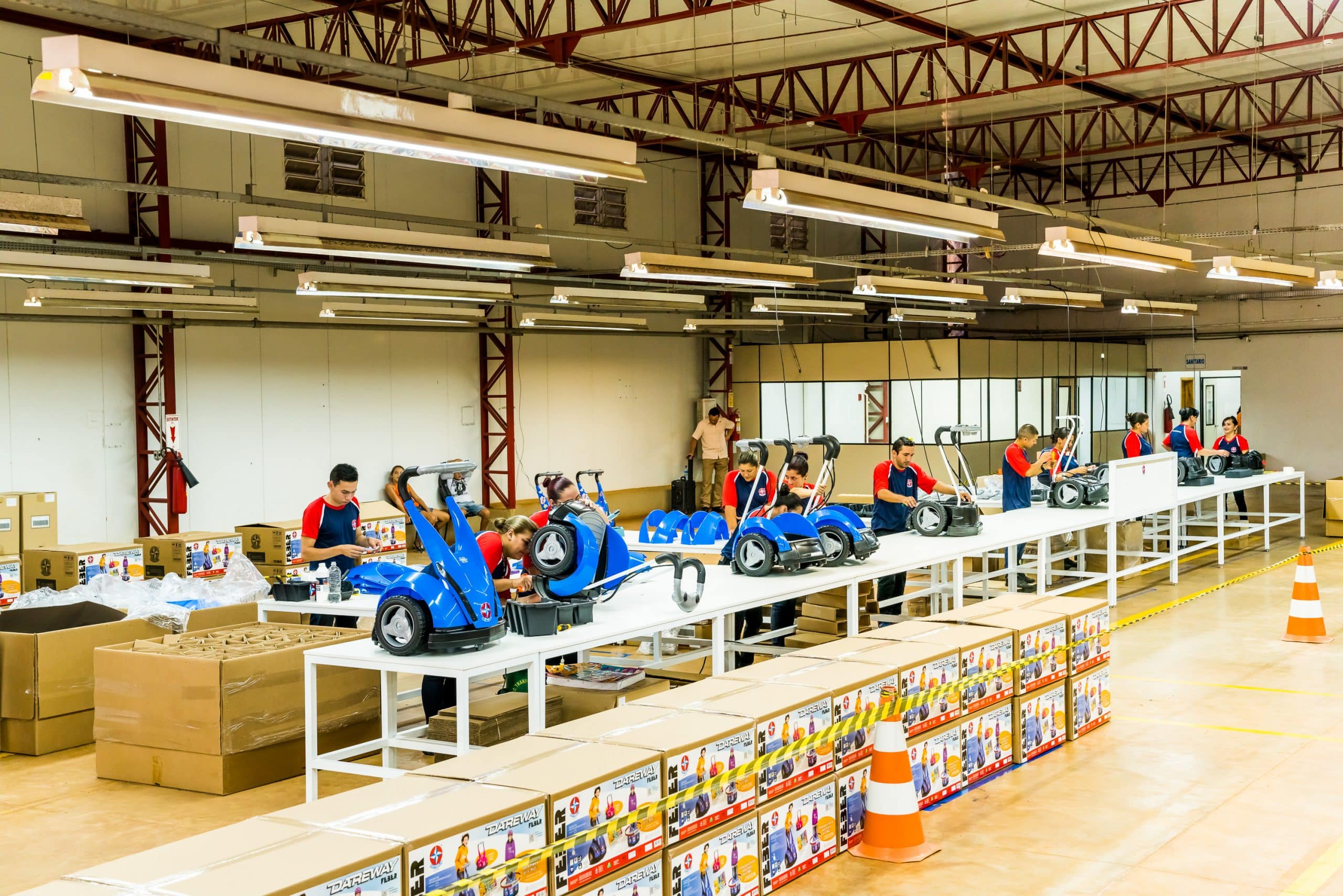
The company has three factories, one in Itapira (São Paulo), one in Ribeirópolis (Sergipe), and another in Três Pontas (Minas Gerais).
A central office in the city of São Paulo serves as the headquarters for the company's intelligence, which maintains its areas of Presidency, E-commerce, Marketing, Sales, New Business, and the Estrela Consumer Service Center (CEAC).
Brinquedos Estrela was founded in 1937 by Siegfried Adler. Initially, Brinquedos Estrela was a small factory producing cloth dolls and wooden cars.
One of the company's highlights in the 1930s was the production of one of the first dolls made in Brazil. With a fabric body and a mass face, the toy measured 38 centimeters.
In the 1940s, Estrela introduced the Mimoso dog, the first wooden toy with movement and sound manufactured in Brazil.
After that, the company launched several other toys that were part of the childhood of generations, such as: Pega Varetas, Banco Imobiliário (launched in 1944), and super massa (modeling clay launched in 1946).

Until the end of the 1940s, dolls were made with an unbreakable mass. But starting in the 1950s, they began to be made of plastic.
This change occurred with Pupi, an articulated doll that slept and cried, launched in the early 1950s. In 1951, Estrela launched the Bebê que Anda, one of the first moving babies.
Other toys were launched, such as the Bonequinha Plastrela (made of plastiflex, which was a revolution at the time), the little animals and vinyl dolls (more flexible and suitable for babies and small children), and the sewing machines (launched in 1952, they actually sewed).
In the 1960s, the company continued to launch various toys. One example was the first mechanical doll, Gui Gui, which laughed when its arms were opened and closed.
Another launch was Beijoca, which blew kisses. During this period, Estrela also introduced the concept of fashion doll through Susi in 1966.
Interestingly, Susi ceased production in 1985 (and was relaunched in 1997), and by that time, over 20 million units of the doll had already been distributed.

Estrela also launched some themed dolls, such as Mary Poppins based on the film of the same name. Finally, Estrela also innovated by launching electric toys like Autorama, a racetrack with cars.
In the following decade, Estrela continued to launch various toys that were part of generations of children. By 1980, the company launched Brazil's first electronic toy, Genius, the talking computer.
Several other toys were launched in the 1980s, such as: Ar-Tur (a robot with self-movement that was very successful), Pégasus (a radio-controlled car that was very successful, launched in 1984), Quem me Quer (a doll launched in 1985), Snif (a plush dog launched in 1986), and Dr. Saratudo's Ambulance (launched in 1985).
In addition, electronics were incorporated into dolls, which became interactive in models like Amore, Brazil's first electronic doll. Other electronic dolls included Bate Palminha, which sang when its hands were joined, and Tchibum, a doll that swam.
In 1985, the hair of the dolls began to be made of nylon, and in 1996, Sapequinha was launched, the first doll to use optical fiber and a photo sensor to detect a child's approach.
The 1990s were marked by the launch of several other successful toys. It was also during this period that Brazil opened up to imports, and the company began to face competition from products from China and Paraguay.
In the 2000s, classic toys like Banco Imobiliário were revamped. Additionally, the company launched several other toys that were popular among children.
In 2010, Estrela began incorporating electronic elements into its board games. At that time, the company launched Super Banco Imobiliário, which, instead of traditional paper notes, used credit and debit cards and a card machine.
The game was so successful that it sold four times more than Estrela's initial forecast. Another item that was quite successful during this time was collectible toys. In 2015, Brinquedos Estrela chose to go private and exit the stock market.
Today, Estrela continues to launch successful toys. It is reissuing classics and launching new toys with licenses from TV shows and in partnerships with YouTubers.