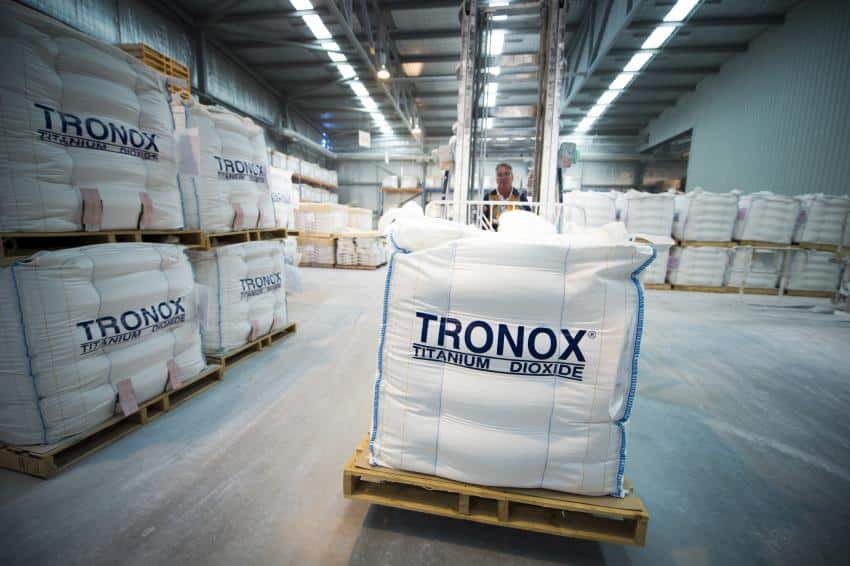
Tronox Pigments of Brazil is considered the second largest company in terms of titanium dioxide (TiO2) pigment production volume in the world. This pigment is essential for the production of high-performance paints used in residential and commercial properties.
In addition, the substance is also used in the manufacture of medical equipment, PVC composition, food packaging, and more.
Tronox markets the pigment through the brands TiONA and TiKON and has a strong presence in the national market. In addition to titanium dioxide production, the company also produces:
Mineral sands;
Ultrafine titanium dioxide;
Titanium chemicals;
Others: caustic soda flakes; liquid caustic soda; gypsum; hydrochloric acid; iron sulfate chloride; iron sulfate, sodium hypochlorite, and sulfuric acid.
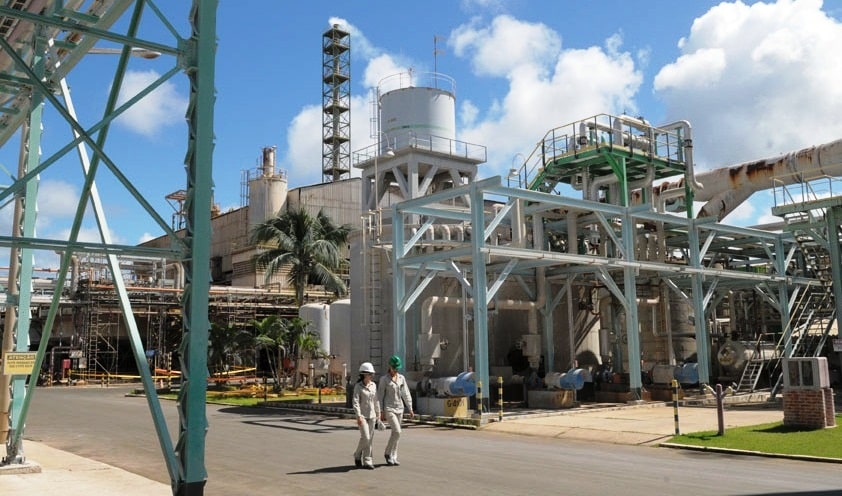
Currently, the company has 7 TiO2 plants distributed across five continents, with two plants in the USA, one in England, one in France, one in Saudi Arabia, one in Australia, and one in Brazil. In Brazil, the company has three units:
The Guaju mine, in Mataraca, Paraíba;
A TiO2 plant in Camaçari, Bahia;
A commercial office in São Paulo.
The history of Tronox began in 1966, with the founding of Cristal Pigments of Brazil S.A, a chemical industry producing white titanium dioxide pigment.
The project was supported by the Superintendence of Development of the Northeast (SUDENE) and BNDES for the implementation and production set at 22,000 tons per year.
In 1971, the technology was acquired from Laport Indústria Ltda, but due to the bureaucracy of constant updates, the founding group opted for an association with Bayer do Brasil S/A in 1971.
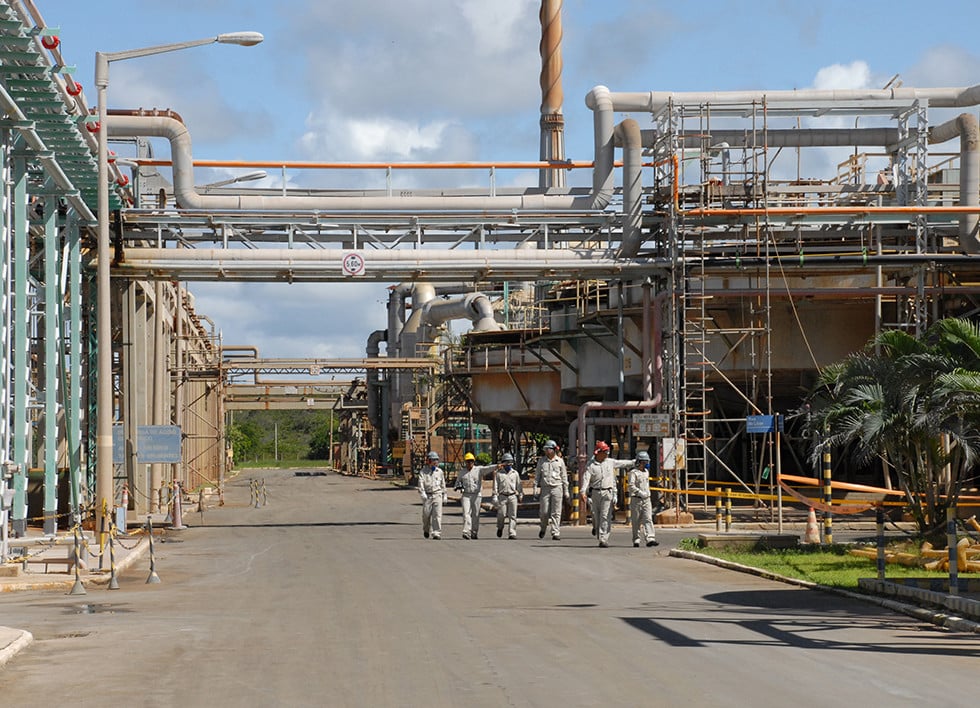
In 1978, the expansion works to increase capacity to 50,000 t/a of titanium dioxide began. This phase was completed in November 1982. In 1983, the company started operating at the Guaju mine, responsible for extracting titanium ore (ilmenite).
In summary, the mine is located in northeastern Brazil, occupies an area of 1,050 hectares, and consists of a complex of floating plant, dredge, and four fixed plants that produce not only ilmenite but also zircon, used in the production of ceramics and refractories.
The mine also produces rutile and kyanite, the former is applied in welding electrodes and metal alloys, and the latter is a raw material for refractories.
Subsequently, in March 2004, Millennium Chemicals Inc (indirect parent company of the firm) and Lyondell Chemical Company signed a contract related to the exchange of shares and mergers of the companies.
The aim was to create the third largest American chemical company with shares listed on the market. In December, Lyondell Chemical Company completed the acquisition of Millennium Chemicals Inc.
In February 2007, Lyondell announced the completion of an agreement with National Titanium Dioxide Company Lta (Cristal) regarding Lyondell's proposal to divest its inorganic chemicals business, including Millennium Inorganic Chemicals of Brazil S.A.
The acquisition by Cristal of Lyondell's titanium dioxide business was completed in May 2007.
As a result, Cristal became the new indirect controlling shareholder of the company, through the acquisition of direct control of Millennium Inorganic Chemicals in the USA, which is controlled by Thann Chimie SAS, a company belonging to the Tasnee Group.
A few years later, in 2017, Tasnee entered into a contract to divest the entire group's titanium dioxide business to Tronox Limited.
Finally, in 2019, Tronox completed the acquisition of the titanium dioxide business from The National Titanium Dioxide Company, known as Cristal, the majority partner of Cristal Pigments of Brazil S.A.