
Company Data
CNPJ
Market Cap
Number of Shares
Listing Segment
IPO Date
Key Indicators
P/E
P/VP
DY
Tag Along
Free float
Viability Seal
No related assets

We use cookies that are necessary for the site to work and, with your permission, analytics and marketing cookies to improve your experience. You can accept all of them or choose what to allow.
Company Data
CNPJ
Market Cap
Number of Shares
Listing Segment
IPO Date
Key Indicators
P/E
P/VP
DY
Tag Along
Free float
Viability Seal
See what thousands of investors think and vote on the assets you consider viable
Vcs gostam de ABEV3?
 1
1Na minha visão é uma empresa que possui lucros consistentes e divida líquida pelo EBITDA sempre abaixo de 2, apesar do tag alone somente a 80% na minha carteira é dentro kk
4Na minha carteira é dentro!!!
1É uma empresa ok, porém tem perdido MarketCap nos últimos anos, isso me preocupa
1Cara, que doidera, empresa sem divida, tem uma boa margem pro setor, um market share gigante, um caixa gigante e a cotação continua caindo, só pq acham que o brasileiro vai beber só produto Heineken daqui pra frente?
1Nao iria em ABEV3, a Heinken chegou com força aqui, tomou muito mercado da brhama, quando eu era jovem que ia em bar la por 2002-04 heineken era cerveja " de rico" , ninguem tomava, a gente ia so na brhama,hoje ta em todos os bares, tomando lugar da brhama , aqui no mercadinho do condominio, eles enchem sexta, as heinekens evaporam, as brhamas e antarticas sobram. Soma-se a isso a "descoberta" e popularizacao das cervejas artesanais. Além disso, ela ja esta totalmente dentro do preço justo, pra ir além disso, teria q ocorrer algo fora do comum, uma retomada do mercado ou algo do tipo, q no cenario atual acho bem dificil rolar.
O que tem achado dessa empresa hoje?, dá para ver que ela tem aumentado o yield e ficado mais barata em comparação com o setor.
É dentro!
Esse tag along 80% é phoda!!
Company Data
CNPJ
07.526.557/0001-00
Market Cap
R$256B
Number of Shares
15.48B
Listing Segment
BOLSA
IPO Date
11/11/2013
Key Indicators
P/E
15.74
P/VP
2.90
DY
5.06%
Tag Along
80.00%
Free float
26.11%
Viability Seal
Find out whether the asset is viable or a dud
Loading data
Loading...
Discover whether an asset is an opportunity or a risk through our seal.


CASH3
Méliuz S.A

PETR4
Petróleo Brasileiro S.A Petrobras

ABEV3
Ambev S.A

ITUB3
Itaú Unibanco Holding S.A
The stock is undefined relative to the fair price by the Graham formula.
R$16.72
The stock is undefined relative to the fair price by the Bazin formula.
R$16.72
| Indicator | ABEV3 |
|---|---|
P/E | 15.74 |
P/B | 2.90 |
Dividend yield | 5.06% |
Market cap | R$ 256 bi |
Net debt/EBITDA | -0.51 |
Net margin | 18.41% |
AVG. DAILY LIQ. | R$ 564.603.268,95 |

Great
Ambev is a leader in the beverage segment, with a broad national and international presence and a vast product portfolio. In addition to being a giant in Brazil, Ambev is also present in 18 countrieswhich can be divided into 4 regions:
Brazil
Canada
South Latin America (LAS): Argentina; Uruguay; Bolivia; Paraguay and Chile
Central America and the Caribbean (CAC): El Salvador; Guatemala; Nicaragua; Dominican Republic; St. Vincent and the Grenadines; Dominica; Antigua and Barbuda; Cuba; Barbados; Panama and Honduras
Interestingly, of these 18 countries, Ambev is a leader in its segment in 10 countries: Brazil, Argentina, Uruguay, Bolivia, Canada, Paraguay, Dominican Republic, Panama, Barbados, and St. Vincent.
Investor Guide
It is worth noting that Ambev has a solid operational structure and several competitive advantages, such as:
Broad production capacity
Diversity of products across all categories
Logistics and Distribution in several countries
Aggressive marketing of its brands
Management, culture, and corporate organization with immense expertise in the field
In total, the company has 30 strong and globally recognized brands. Among the products that the company produces are:
Beers
Draft beers
Sodas
Juices
Isotonic drinks
Energy drinks
Waters
Teas
Mixed drinks
Let's learn a little more about its main products:
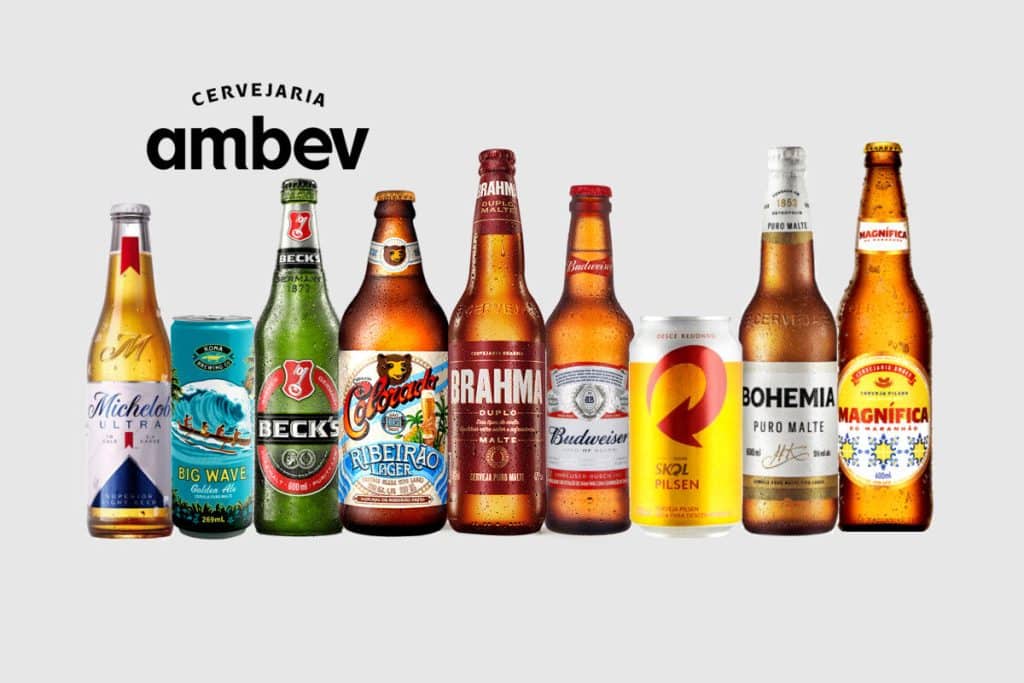
Ambev specializes in the beer market, where it has extensive experience. Among its products are lines that encompass various beer categories and cater to a wide range of social classes.
Catalisi
In other words, the company has Premium products that have a higher added value as well as products aimed at mass consumption, with more accessible prices.
The company's alcoholic beverage segment is divided into three subcategories. This division allows for a wide variety of products and contributes to greater scalability and market reach. Most competing beer brands belong to Ambev. The three segments are:
Premium: This segment has a higher added value. Among the brands are: Stella Artois, Budweiser, Corona, Wäls, among others;
Intermediate: In this category, we have brands such as: Bohemia, Brahma, Skol, Serra Malte, Original, Antarctica, among others;
Value: Here are the beers with more accessible prices for the mass market, such as: Nossa, Legítima, among others.
To provide this wide variety of beers, the company mainly uses raw materials such as barley, malt, hops, and yeast. In this regard, the Company seeks to have a very close relationship with farmers, providing incentives for planting, selected seeds, and fertilizers for some smaller farmers.
Despite this, Ambev still needs to import barley to meet its beer production. The barley grains, whether harvested or imported, are transferred to its malting facilities and then distributed to the breweries.
Once the necessary items are obtained, all beer production is done in the company, in 5 phases: mashing, fermentation, filtration, tasting, and bottling. Finally, the line is organized for transport to various suppliers, such as supermarkets, bars, and restaurants.
Leaf
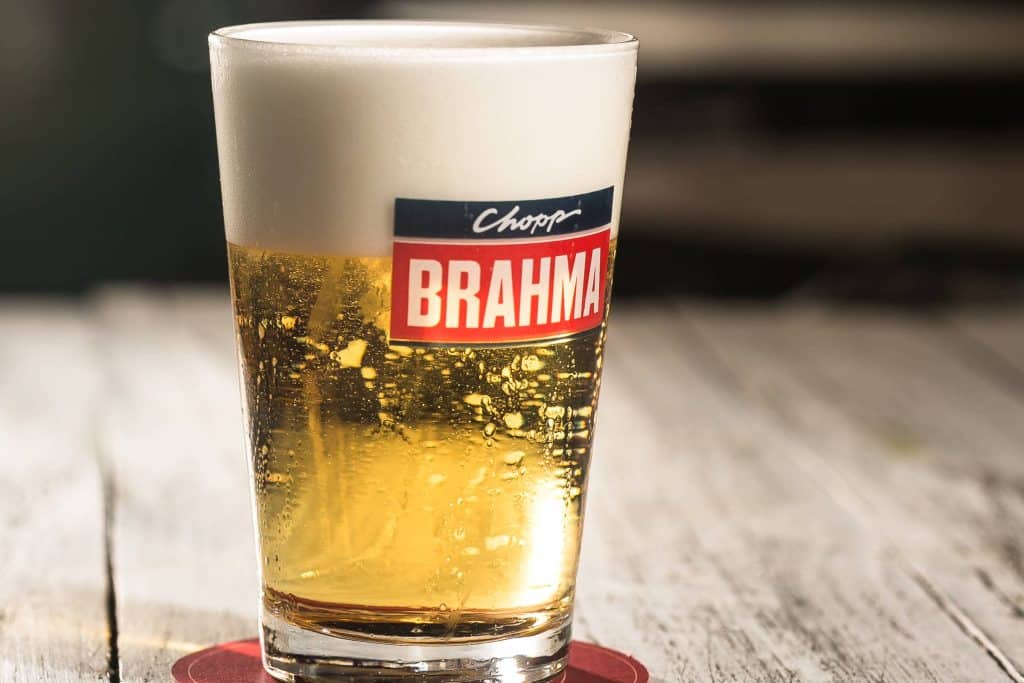
Ambev's main draft beer production lines are: Chopp Brahma Claro and Chopp Brahma Black. Draft beer is the company's unpasteurized line and is very present not only in bars and restaurants but is also a registered brand at major events and festivals in the country.
Ambev's flagship product is beer, but the company also produces several famous soda brands, including:
Guaraná Antarctica
Citrus Antarctica
Soda Antarctica
Sukita
Tônica Antarctica
Guaraná Baré
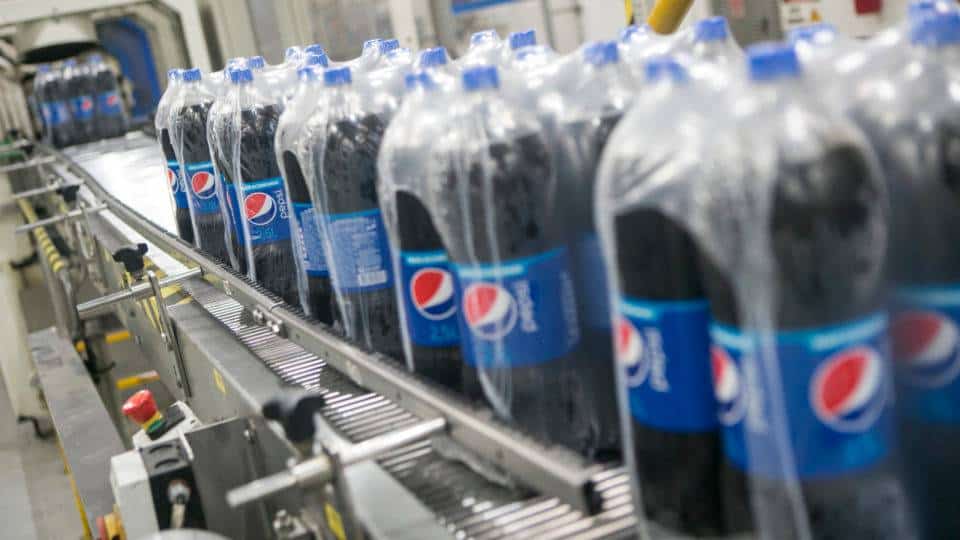
In addition, the company exclusively produces and markets the products of:
Pepsico
H2OH
Pepsi
Gazeta do Povo
In the juice segment, Ambev operates through the Do bem brand, acquired in 2016. In the isotonic segment, the company is responsible for the production and distribution of Gatorade products in the national market.
In addition, Ambev operates in the production and marketing of energy drinks, including its own brand called Fusion, which mixes taurine with guaranine, the natural caffeine from guaraná. Besides the energy drink itself, Ambev also distributes Red Bull in Brazil since 2019.
Another product that Ambev produces and markets, which few people know about, is water, through the brand Ama. In fact, through this brand, Ambev engages in social work by donating 100% of the profits from sales to projects providing access to drinking water in the Brazilian semi-arid region. Finally, through its Lipton brand, Ambev sells teas in different formats: sachets, bottled, and loose leaf.
Ambev's mixed drinks line is extremely popular in the national scene. Currently, this category includes the main Skol Beats: Sense, Secret, Spirit, GT, 150 BPM, among others.
The history of Ambev began in 1853, when a group of industrialists from São Paulo bought a piece of land in the Água Branca neighborhood in São Paulo. There, the headquarters of Companhia Antarctica Paulista was established.
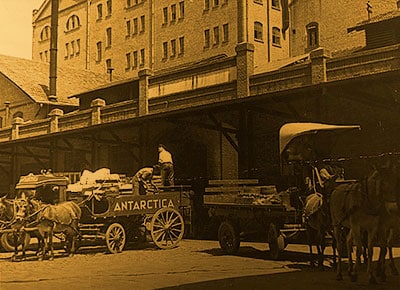
In the same year, Bohemia, the first brewery in Brazil, was founded in Petrópolis, RJ, by other entrepreneurs. In 1888, the Swiss Joseph Villiger opened a small workshop named Manufactura de Cerveja Brahma & Villeger & Companhia in Rio de Janeiro - RJ.
Six years later, he joined Cervejaria Georg Mascke & Cia and improved his production. After more than 50 years of expansion, in 1904, Companhia Antarctica Paulista acquired a large brewery in Mooca, making it its main producer.
In the second decade of the 20th century, the company launched Soda Limonada Antarctica and Água Tônica Antarctica. Shortly after, the year 1921 was marked by the beginning of the production and marketing of Guaraná Champagne Antarctica.
Not long after, in 1930, Brahma bought Companhia Guanabara from São Paulo. This year marked the beginning of the production of Brahma Chopp beer in the state.
By 1941, Antarctica began to control Companhia Adriática from Paraná, producer of Cerveja Original, and in 1961, Cervejaria Bohemia came under the control of Antarctica.
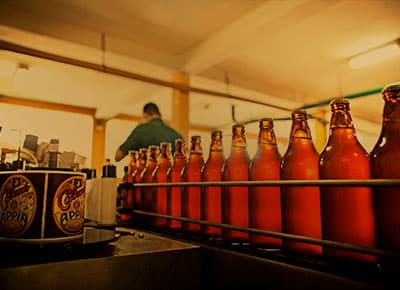
Ambev
A significant step for the company's global expansion occurred in 1976, when Europe, the United States, and Asia began importing products from the now large company Antarctica.
Ambev continued with its expansion plan, and two years later, took control of Cervejaria Serramalte. In 1980, Brahma, aiming to expand its operations, purchased the controlling stake in Cervejarias Reunidas Skol Caracu S.A., the manufacturer of Skol beer.
A major milestone for its consolidation in the non-alcoholic segment occurred in 1984, when Pepsi Cola arrived in Rio de Janeiro due to the agreement between Brahma and PepsiCo International for the manufacture, marketing, and distribution of the soft drink.
At this moment, the creation of Ambev becomes clearer, as the rivals Antarctica, controlled by the Zerrenner Foundation, and Brahma, controlled by Jorge Paulo Lemann, Marcel Herrmann Telles, and Carlos Alberto da Veiga Sicupira, set aside their historic national rivalry.
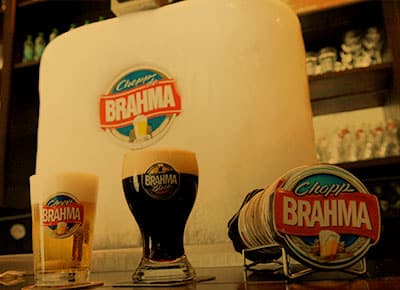
Ambev
Thus, in 1990, both joined forces to compete together for the international consumer. Finally, the multinational Ambev was established as Aditus Participações S.A. on September 14, 1998.
Continuing its development, Ambev launched Boehmia Weiss, Bohemia escura, and Skol Beats in 2003. In the same year, the company accelerated its international expansion through a transaction with Quinsa, establishing a leading presence in the beer markets of Argentina, Bolivia, Paraguay, and Uruguay.
However, its fixation as a global leader clearly occurred in 2004, when Ambev joined Interbrew in Belgium, giving rise to Inbev. In 2004, Quilmes beer arrived in Brazil as a result of that partnership between Brazilian AmBev and Argentine Quinsa.
After acquiring the American brewery Anheuser-Busch in 2008, the multinational now named AB Inbev began to control nearly half of the beer market in the U.S. In 2011, the famous Budweiser beer began to be sold in Brazil, and 3 years later, the Corona brand was included in the Premium portfolio.
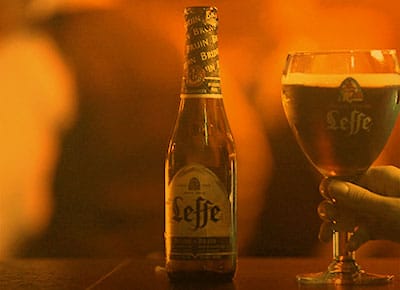
Ambev
The growth through a series of acquisitions did not stop there, and in 2015, Anheuser-Busch InBev bought SAB Miller. In 2016, Ambev entered the juice and tea market by acquiring the brand Do Bem.
In 2018, the company's Canadian subsidiary, Labatt Brewing Company Ltd., partnered with High Park Farms Ltd., a global pioneer in the production and distribution of cannabis, with the main purpose of researching non-alcoholic beverages containing cannabis extracts for possible commercialization only in Canada.
